When the Factories Went Quiet: NAFTA and the Day Rural America Felt Left Behind
When the Factories Went Quiet: NAFTA and the Day Rural America Felt Left Behind
I grew up in rural Southwest Virginia in the 1970s and 1980s, back when you could read the economy just by driving the back roads.
You’d pass a dairy farm. Then a tobacco patch. Then, tucked along a creek or just off a two-lane road, a small factory. Around here that meant places like the Buster Brown sock plants or the glove factory. Over in Lee County VA, it was the DeRoyal plants making hospital gowns and apparel. Same scene throughout rural America, with different company names.
Those buildings didn’t look like much. But they were the backbone. Back then, rural America had balance.
Small dairy farms were real businesses. In the late 1960s through the 1970s, the average U.S. farm brought in around $11,000 a year…solid money for that time. Adjusted for today, that’s roughly $90,000 to $100,000 a year. Middle-class income, plain and simple. Dairy had one thing going for it that mattered: steady checks. Milk went out every day, and money came back every month.
Tobacco was something else entirely.
If you had quota and you knew what you were doing, tobacco could carry a farm. Folks around here will tell you straight…good years could bring close to $2,000 an acre in profit. It was hard work, but it paid.
Now add the second leg.
Most families didn’t rely on just the farm. One spouse worked off-farm, usually at one of those small manufacturing plants. That job didn’t just bring a second paycheck. It brought health insurance. It brought retirement. It brought stability.
That combination-farm plus factory-built a rural middle class.
Main Streets showed it. Locally owned stores. Movie theaters. Car dealerships in the bigger towns. Tractor dealers, feed stores, fertilizer plants in the farming counties.
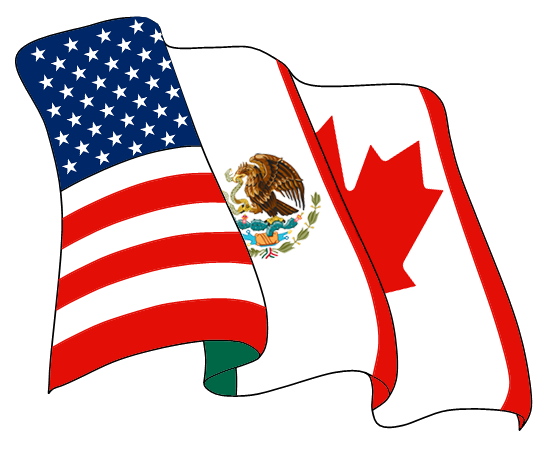
Then came the North American Free Trade Agreement. And it was signed by Bill Clinton on December 8, 1993. It wasn’t a quiet signing.
There was fanfare. A White House ceremony. Leaders from both parties standing shoulder to shoulder. It was pitched as a forward-looking moment—America stepping into a new global economy, expanding trade, creating opportunity.
That mattered.
Because for generations, Democrats had been the party of working people in places throughout rural America. Farmers. Miners. Factory workers. The folks who kept these communities going.
NAFTA was sold as progress. Lower trade barriers. More exports. A stronger national economy.
And on paper, some of that happened. But on the ground, in rural America, it landed different.
The industries most exposed; textiles, apparel, small manufacturing were concentrated in places like ours. When tariffs came down, those jobs didn’t just adjust.
They left.
Research shows areas most exposed to NAFTA saw real declines in manufacturing employment, especially in lower-skill regions. That’s rural America. And when those jobs left, they didn’t come back in another form.
A factory closes in a city, and something else might take its place. A factory closes in a rural county, and it leaves a hole. You lose the jobs. Then the spending. Then the tax base. Then the people.
At the same time, the farm side was changing too. Agriculture was consolidating. Small dairy operations started disappearing, the Dairy Buy-Out of the 1980s. Tobacco, once a lifeline, began its long decline and final death blow in the early 2000s.
So both legs of that rural economy started giving way at the same time. And here’s the part folks still remember. There was no replacement plan.
No new industry waiting in the wings. No serious investment by the federal government or policy proposed by the Democratic Party to rebuild what was lost.
Just a promise that the overall economy would grow and somehow that would be enough.
It wasn’t. And that’s when something else changed. It wasn’t just the economy. It was trust.
Because out here, folks don’t read policy papers. They watch what happens to their neighbors. They see who loses a job, who leaves town, who can’t make the mortgage anymore.
And when the factories went quiet, a lot of people felt like Washington went quiet too.
That feeling stuck. And it hasn’t left.
Be curious, not judgmental.
Till next time, that’s the story from the ‘Back Forty’. — John W. Peace II
Magazines Interested in republishing this article? Contact the author at urTOPIX1@gmail.com for permission and details. Readers, feel free to share.

John Peace / Author
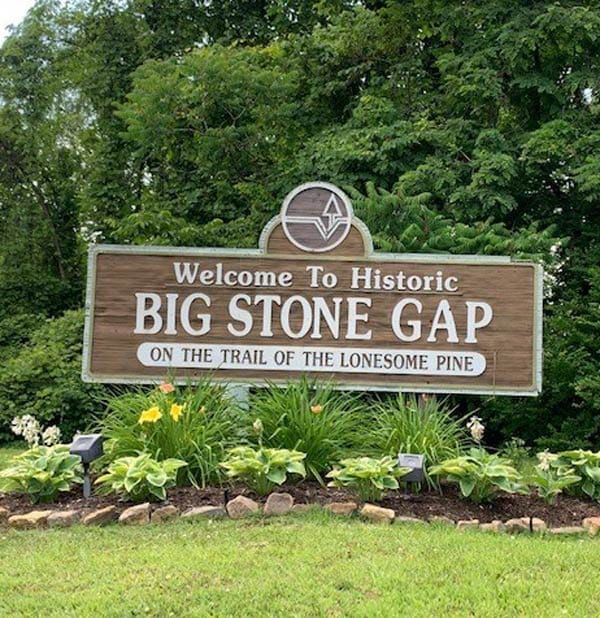
John W. Peace II is a fifth-generation farmer from Big Stone Gap, Virginia, where he grew up on his family’s dairy, Clinch Haven Farms, and still lives today. He’s a proud father to Trey and Shelby Peace, and partner in life to Cathy Swinney. A Virginia Tech graduate with graduate studies at Penn State, he served as the youngest Chair of the Wise County Board of Supervisors (2004–2008).
John is a board member of www.RuralAmericaRising.com PAC.
Rural America Rising PAC is a grassroots organization dedicated to supporting local and regional political candidates across rural America, particularly Democratic and Independent candidates working to bring balanced politics back to small towns and rural communities. From school boards and town councils to state legislative races and congressional campaigns, the organization helps rural candidates build competitive campaigns through media support, strategy, grassroots networking, and fundraising assistance.
He’s also a two-time Amazon bestselling author. Learn more at www.JohnWPeace.com.
Contact: https://linktr.ee/JohnWPeace

Comments ()