Who Owns the Algorithm That Decides Whether You Ever See the Story?
Pew Research found in 2024 that about one in five American adults regularly got news from social media news influencers. Among adults under 30, it was more than one in three.
There was a time when, if you wanted to influence American public opinion, you bought yourself a newspaper. If you had enough money, you bought several.
By the late 1800s and early 1900s, publishers like William Randolph Hearst and Joseph Pulitzer had built powerful newspaper operations. Newspapers could make politicians famous, make them miserable, stir up the public and sometimes make a fellow wish he'd stayed home, minded his own business and raised chickens.
This was the world that helped produce America's Progressive Era. Industrialization had created tremendous wealth, but an awful lot of it collected at the top. Railroads, banks, steel companies and oil companies wielded enormous economic and political power. Workers spent long days in dangerous factories and mines, sometimes with children working right there beside them. Government corruption wasn't exactly hard to find, either. You didn't need a bloodhound and a search warrant.
Progressives believed the government ought to do something about it. Theodore Roosevelt took on corporate monopolies, pushed consumer protections and championed conservation. Woodrow Wilson signed the Federal Reserve Act, created the Federal Trade Commission and strengthened antitrust law. Then the Great Depression came along and knocked the country flatter than a possum on a four lane.
Franklin Delano Roosevelt entered the White House in 1933 and greatly expanded ideas that had been growing since the Progressive Era. His New Deal brought the Civilian Conservation Corps, public works programs, banking reforms, securities regulation and the Tennessee Valley Authority. The Wagner Act strengthened workers' right to organize. Then came the Social Security Act of 1935, establishing old age benefits, unemployment insurance and other protections that became part of America's economic foundation.
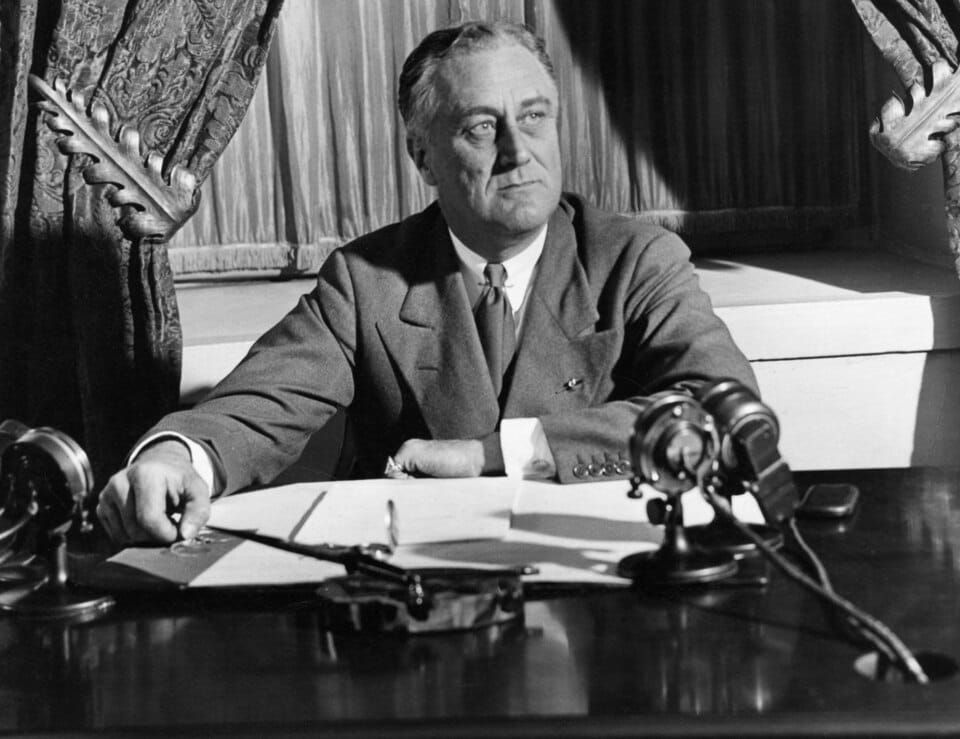
But FDR understood something else. It didn't matter much what you passed in Washington if ordinary Americans didn't understand what in the world you were doing up there. Fortunately for Roosevelt, a relatively new technology was spreading across America: RADIO.
Roosevelt didn't invent political communication by radio, but he sure understood its power. His broadcasts became known as "fireside chats," and he didn't sound like he was reading legislation written by twelve lawyers and a fellow who'd swallowed a dictionary. He talked to people.
During the banking crisis of 1933, Roosevelt explained what banks did with people's money, why the government temporarily closed them and why Americans could trust those allowed to reopen. In 1935, while Congress considered what became Social Security, he used another broadcast to talk about economic security and unemployment.
Think about the power of that in 1935. You might live on a farm twenty miles from town, and going to town wasn't something you did because you forgot a loaf of bread. Television didn't exist in your living room. Then the President of the United States came through that wooden radio sitting beside the kitchen table and explained what he was trying to do. Roosevelt had figured out how to walk around the traditional gatekeepers of that era.
Nearly a century later, in 2016 Donald Trump and the MAGA movement figured out something remarkably similar. The politics are different and the technology is different, but the trick ain't all that different: go around the gatekeepers.
Instead of fireside chats, today's political messages travel through Facebook, Instagram, X, TikTok, YouTube, podcasts, livestreams and thousands of influencers. Pew Research found in 2024 that about one in five American adults regularly got news from social media news influencers. Among adults under 30, it was more than one in three.
Look at how complicated legislation gets marketed today. Trump's One Big Beautiful Bill wasn't sold by asking everybody to curl up after supper with hundreds of pages of congressional language. It was sold with things people could remember: "No tax on tips." "No tax on overtime." Tax relief. Border security. Tax cuts.
Whether you support those policies or oppose them isn't the point. We're talking about how you sell an idea. Simple messages travel better than a stack of congressional paperwork thick enough to chock the wheels on a coal truck. Roosevelt knew it. Reagan knew it. Obama knew it. Trump certainly knows it.
What has changed is who controls the road between the politician and you. FDR used radio to bypass newspaper publishers who could interpret, criticize or bury his message. Today politicians try to use social media to bypass newspapers and television networks. Trouble is, we didn't really get rid of the gatekeeper. We just have new gatekeepers in 2026. A lot has changed in just one decade since 2016.
Facebook and Instagram belong to Meta. YouTube is part of Google's world under Alphabet. X is controlled by Elon Musk. TikTok grew from ByteDance. These platforms allow a farmer in Virginia, a schoolteacher in Tennessee or some fellow sitting at his kitchen table in Kentucky to potentially reach more people than many newspapers could have dreamed of reaching a century ago.
The important word there is "potentially." A post might get 10,000 views, hundreds of likes and dozens of shares. You sit there looking at those numbers and think, Well, shoot, we're getting somewhere now.
Maybe you are, but those numbers don't tell you whether you've reached 10,000 different kinds of people or 10,000 people who already pretty much agree with you.
Social media recommendations learn from what we watch, click, like, share and follow. And let's be fair about it, we help the process along. We follow people we agree with, join groups full of folks who think like us and every now and then block that one fellow who aggravates us every time we open Facebook. The algorithm pays attention, and before long the choir is singing to itself.
Pew found that among strongly ideological Republicans and Democrats who regularly received news from influencers and encountered political opinions, 42 percent on each side said those opinions mostly agreed with their own. That's worth thinking about, no matter which side of the political fence you're standing on.
Social media can make us believe we're standing in the town square when sometimes we're standing in the church choir. Everybody around us knows the words and everybody is singing the same song. After enough likes, shares and amens, we start thinking the whole county must be singing along. Then Election Day rolls around and we discover half the county wasn't even in the building.
The algorithm isn't necessarily sitting there trying to make you a Republican or Democrat. Its immediate interest is a whole lot simpler. It wants you to stay, and whatever keeps you there is doing its job.
If something makes you happy and keeps you scrolling, that'll work. If something makes you madder than a wet hen and keeps you scrolling, that'll work too. If Cousin Earl's new bass boat keeps you staring at the screen, well, Earl's bass boat has done its civic duty. Attention keeps us on the platform, and attention can be turned into advertising dollars.
That's a different kind of media power. Hearst could decide what appeared on the front page of his newspaper, but everybody knew Hearst owned the newspaper. Today's system is harder to see. Two neighbors can sit on opposite sides of the same fence, open the same social media app and get two radically different pictures of America. Both can walk away convinced everybody else is seeing exactly what they're seeing.
That's where this gets troubling.
A hundred years ago, Americans worried about who owned the printing press. Roosevelt's generation discovered the power of the microphone. Today almost anybody can own a microphone, start a podcast, publish a newsletter or make a video. We can speak louder and farther than ordinary people at any other point in history, but speaking and being heard aren't necessarily the same thing.
Maybe that's the part we've missed.
The question isn't whether we can speak anymore. We surely can. The question is who gets to hear us, who decides who gets to hear us and, just as important, who never hears us at all.
And that leaves us with a question bigger than Republican, Democrat, MAGA or progressive:
Who owns the algorithm that decides whether you ever see the story?
Follow-Up Reading: Do Your Own Research
Social Security Administration: Social Security Act of 1935The history and original legislation behind one of the New Deal's lasting programs.https://www.ssa.gov/history/35act.html
Franklin D. Roosevelt Presidential LibraryFDR's speeches, fireside chats and other primary historical materials.https://www.fdrlibrary.org/
Library of Congress: Chronicling AmericaHistoric American newspapers showing how news and political arguments reached Americans before radio and television.https://chroniclingamerica.loc.gov/
Pew Research Center: America's News InfluencersResearch into how Americans receive news from social media personalities and the political opinions they encounter.https://www.pewresearch.org/journalism/2024/11/18/americas-news-influencers/
Stanford Graduate School of Business: How Social Media Feed Algorithms Affect Attitudes and BehaviorResearch examining what happened when Facebook and Instagram users received chronological rather than algorithmically ranked feeds.https://www.gsb.stanford.edu/faculty-research/publications/how-do-social-media-feed-algorithms-affect-attitudes-behavior
YouTube: How YouTube Recommendations WorkThe platform's own explanation of how viewing history, subscriptions, likes and other signals influence recommendations.https://support.google.com/youtube/answer/9962575
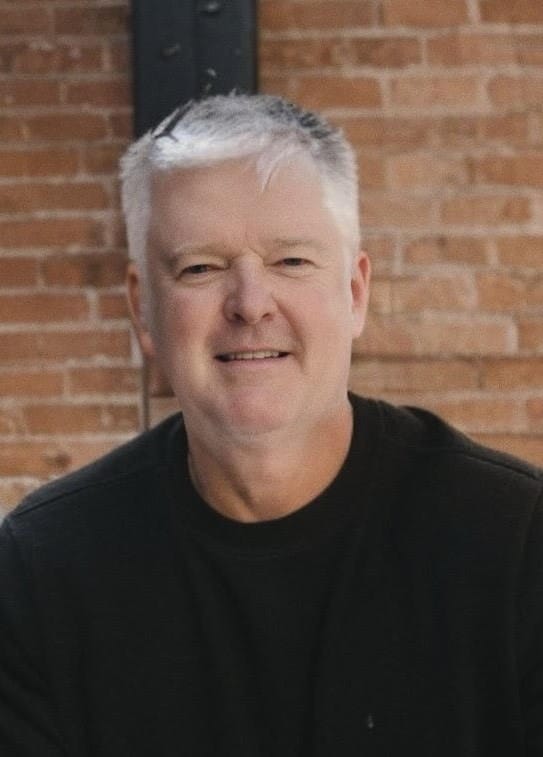
John W. Peace II is a syndicated feature writer, two-time Amazon bestselling author and fifth-generation Virginia farmer whose work focuses on rural America, Appalachian culture, history and the people who keep small-town America running. Learn more at www.JohnWPeace.com and visit www.BackPorchTalesAndTravels.com for more stories from across Appalachia and rural America.
Readers, please share. Newspapers and magazines wishing to republish this or another article, please just email me. urtopix1@gmail.com
Comments ()