
Not In My Backyard
Would you want a crematorium in your backyard?
By John W. Peace II / https://linktr.ee/JohnWPeace
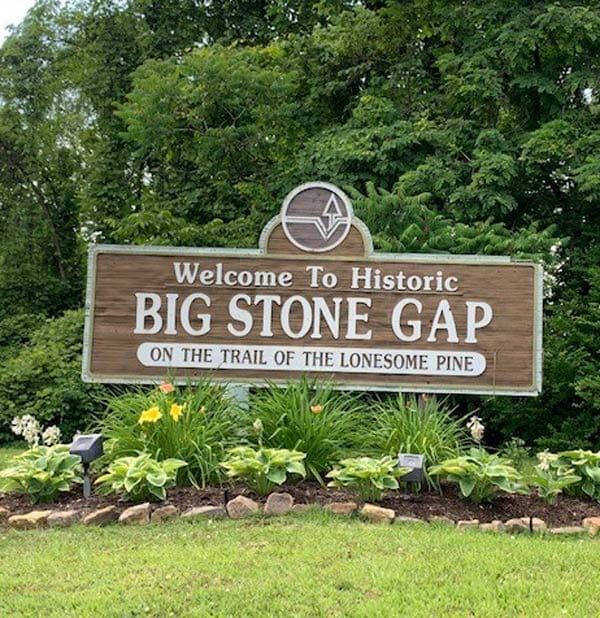
BIG STONE GAP, Va. — Most Big Stone Gap Planning Commission meetings don't draw much of a crowd. Tuesday night's special called meeting was different. The reason could be summed up with an old real estate saying: location, location, location.
The commission met Aug. 25, 2026 to take another look at a special-use permit requested by Holding Funeral Home for a crematorium proposed inside a World War II-era Quonset hut on its property. The matter had been returned by Town Council for additional fact-finding and clarification. The meeting began at 5:34 p.m. with a quorum present. The official agenda listed the Holding Funeral Home permit as the commission's only item of old business.
The property is zoned B2 General Business, but a crematorium isn't allowed by right anywhere in Big Stone Gap. It requires a special-use permit. What brought people into Town Hall was the property's location within a National Register historic district, surrounded by a part of downtown where homes, businesses, tourism and history all rub elbows.
Michael Reibe, manager and operator of Holding Funeral Home, attended with Big Stone Gap attorney Tim McAfee. They laid out their case for the permit, discussing state environmental requirements, fire and building codes and the technology proposed for the facility. Reibe also explained a changing funeral business. More families are choosing cremation, he said, and the proposed facility would serve Holding Funeral Home and three other funeral homes he operates.
The proposed machine is an American A200 "Hot Hearth" cremator equipped with a pollution-control computer system designed to monitor operation and reduce visible emissions. Discussion touched on oversight by the Virginia Department of Environmental Quality, state funeral-service regulators and fire and building officials. The commission also discussed making the exact cremator specified in the application a condition of any permit.
Big Stone Gap already has a crematorium operated by Gilliam Funeral Home since 2009. As the crow flies, it isn't all that far away. But opponents repeatedly pointed out what they considered an important difference: the existing crematorium isn't sitting in the same historic downtown setting. That, more than cremation itself, became the dividing line Tuesday night.
There wasn't much table pounding or hollering. In fact, one of the more refreshing things about the meeting was how cordial it remained. Riebe and McAfee made their case. Planning Board members asked questions. Residents opposed to the location made theirs. Several went out of their way to say their objections weren't personal toward Reibe or Holding Funeral Home. Some said they were considering cremation for themselves.
Their argument was pretty simple. They didn't object to cremation. They objected to where the crematorium would be located.
Local residents raised concerns about long-term exposure to particulate matter, heavy metals and other emissions. Others worried about property values, tourism and what might happen if equipment malfunctioned and produced smoke or odor. One speaker cited research suggesting property values near crematoriums could decline between 0.3 and 3.6 percent.
There was support, too. A nearby resident said he had lived close to another local crematory for years without knowing when it was operating. Reibe and McAfee argued that today's equipment is considerably cleaner than older cremation technology and compared its emissions cleaner than other everyday sources such as wood stoves or pizza ovens.
Then there was the gas tank.
Plans call for an above-ground liquefied petroleum gas tank of roughly 1,000 to 1,200 gallons. Discussion indicated that the proposed location would have to be changed because an existing LP tank on neighboring property affects the required setback. The installation would also require safety measures, including protection from vehicle impacts, and would have to satisfy applicable fire and building codes.
Board Members spent considerable time looking for ways to put measurable conditions on the permit rather than relying on promises. Noise was one example. Preliminary information discussed at the meeting put exhaust noise around 45 decibels, although board members wanted official manufacturer's data before settling on a standard. A possible limit of approximately 70 decibels at the property line was discussed.
Preserving the outside appearance of the Quonset hut and surrounding buildings was another consideration due to the Historic district designation, along with limiting exterior signage identifying the building as a crematorium. Operating hours proved trickier. A complete cremation process can take seven to eight hours from preheating through cooldown, making a hard shutdown time impractical. Instead, discussion centered on coordinating operations with the town to avoid major downtown events when possible.
The Planning Board also discussed using Big Stone Gap's existing nuisance ordinance to address founded complaints involving smoke, odor or noise. Violations of special-use conditions could ultimately result in action by Town Council, including revocation of the permit.
By the end of the meeting, both sides had made compelling cases. Holding Funeral Home presented modern equipment, pollution-control technology, state environmental oversight, fire codes and safeguards intended to make the operation as clean and unobtrusive as possible. Residents didn't necessarily dispute those safeguards. Their concern kept coming back to the same thing: location.
Strip away the equipment specifications, decibel readings, environmental regulations, setback requirements and permit language, and the question becomes a pretty simple one.
Would you want a crematorium in your backyard?
That is the question now facing Big Stone Gap residents that live downtown, and ultimately, it will be up to the Big Stone Gap Town Council to decide.


Comments ()