Americans Think Government Is Corrupt. Maybe We Ought to Ask Why.
Shoot, nowadays you couldn't get that many Republicans and Democrats to agree the sun came up this morning.
There was a time when most Americans actually trusted the federal government. I know, that sounds about as believable today as a politician showing up at the county fair, eating a funnel cake and leaving without shaking a single hand, but it's true.
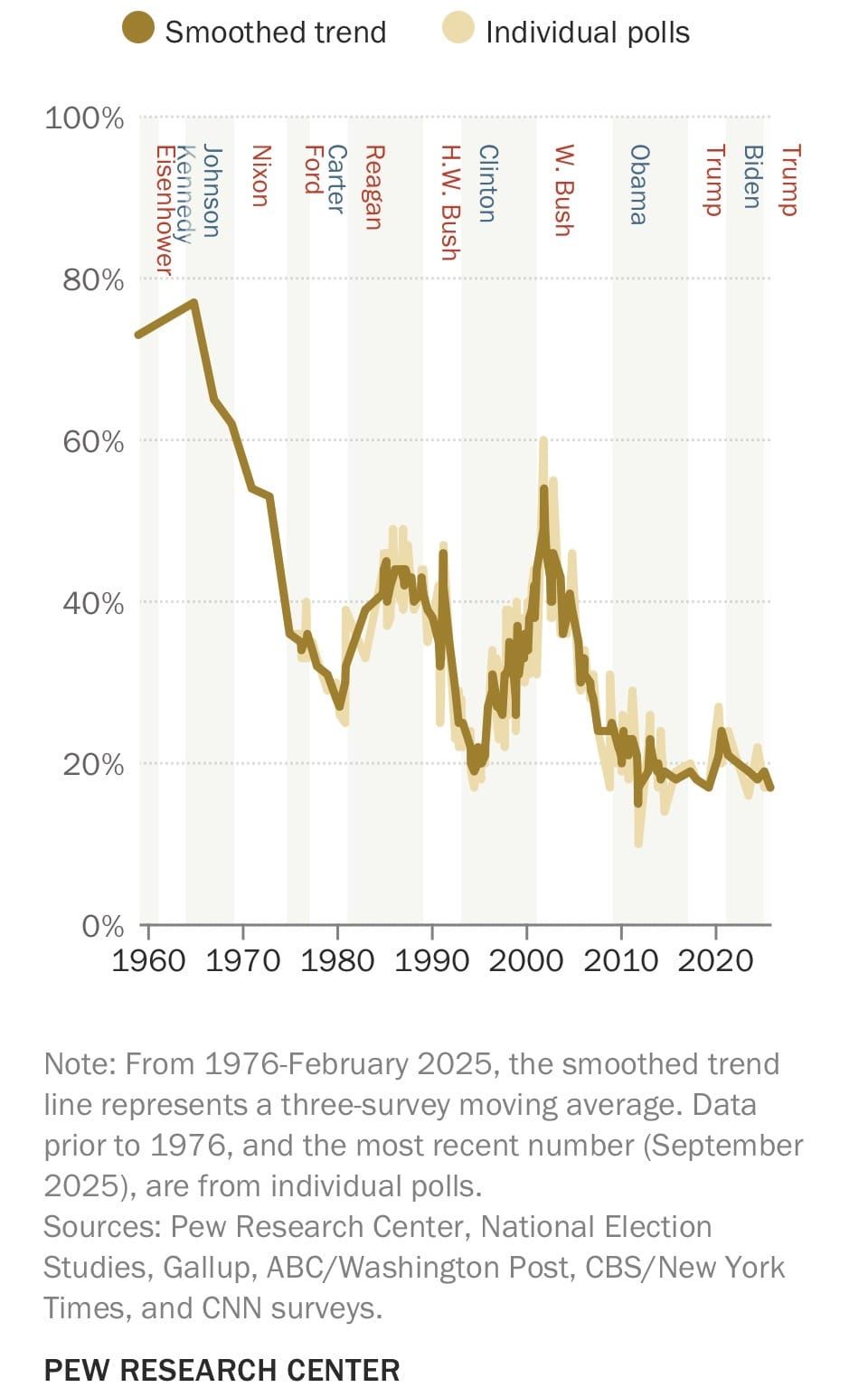
Back in 1958, when researchers started asking Americans whether they trusted Washington to do what was right just about always or most of the time, 73 percent said yes. By 1964, it had climbed to 77 percent.
Today it's 17 percent.
That's according to Pew Research Center's long-running study of public trust in government. Pew says today's level is among the lowest recorded in nearly seven decades of asking the question, and you really need to look at the graph to appreciate what's happened.
Look at this thing
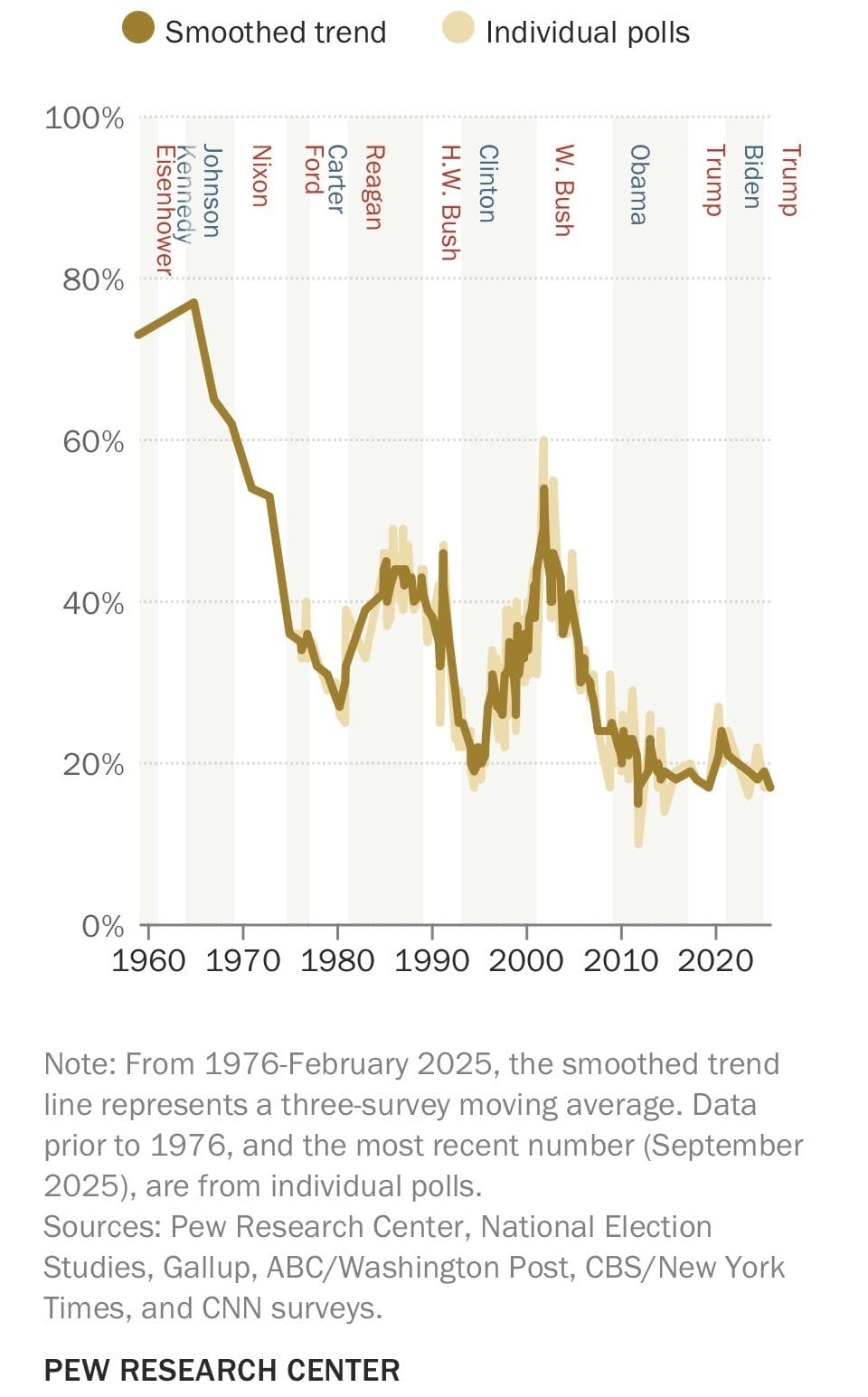
Source and original graph: Pew Research Center — Public Trust in Government: 1958–2025
You don't need a political science degree to read that line. It's headed downhill like an old farm truck that just lost its brakes. Vietnam came along, then Watergate and the economic troubles of the 1970s. Trust bounced around some, recovered at different times, then came Iraq, the financial crisis, harder partisan politics and another long slide. Since 2007, Pew says trust in Washington hasn't gotten above 30 percent.
Distrust and corruption aren't exactly the same critter, though. You can think your mechanic doesn't know what he's doing without believing he's stealing the tires off your truck. So somebody asked Americans directly about corruption.
Seven out of ten say corruption is a major problem
In January 2025, the Associated Press-NORC Center for Public Affairs Research asked Americans about corruption in the federal government. Seventy percent called it a major problem, another 22 percent called it a minor problem and only 7 percent said it wasn't a problem.
Read the poll: AP-NORC — Corruption in the federal government
Now, hold your horses before everybody rides off after whichever political party they already don't like. A poll showing Americans believe the government is corrupt doesn't prove the government is more corrupt today than it was 40 or 60 years ago.
Perception ain't proof, but perception matters plenty in a democracy. If 70 percent of the folks in town thought the fellow running the local garage was crooked, he'd have himself a business problem whether every accusation was fair or not.
Follow the money
When Americans say corruption, I doubt everybody pictures some congressman in a trench coat taking an envelope full of twenties behind the Applebee's. They're also looking at campaign money, lobbyists, big donors, stock trading, government contracts and the revolving door between government and the industries it's supposed to regulate.
Then there's Citizens United.
In 2010, the Supreme Court ruled in Citizens United v. Federal Election Commission that government could not prohibit corporations and unions from making independent political expenditures. It did not allow corporations to give unlimited money directly to candidates, an important distinction that sometimes gets lost in the shouting.
But it helped reshape the world of political spending Americans see today, alongside subsequent court decisions and the rise of super PACs.
And Americans don't much like what they see.
Pew reported in 2026 that 74 percent of Americans call the role of money in politics a very big problem. Here's the part Washington ought to tape to the refrigerator: 70 percent of Republicans and Republican-leaning voters agreed, along with 79 percent of Democrats and Democratic-leaning voters.
Shoot, nowadays you couldn't get that many Republicans and Democrats to agree the sun came up this morning.
See the polling: Pew Research Center — Money in politics is widely viewed as a big problem
Pew has also found 72 percent of Americans favor limits on what individuals and organizations can spend on political campaigns, while 80 percent say big campaign donors have too much influence over members of Congress. Meanwhile, 70 percent say ordinary people have too little influence.
There's your problem sitting right there on the kitchen table.
Big donors have too much influence. Lobbyists and special interests have too much influence. Regular folks don't have enough. Americans overwhelmingly say money in politics is a problem, yet election after election the money keeps rolling in while meaningful campaign-finance reform goes nowhere.
Some of it is perfectly legal. Well, shoot, that's partly the point.
You don't have to call it corruption to understand why folks do.
Who does the government belong to?
The easiest thing is blaming the other political party. Republicans blame Democrats, Democrats blame Republicans, and independents sit on the porch muttering that both of 'em need their heads examined.
But these numbers are telling us something bigger. Seventy percent say corruption is a major problem. Seventy-four percent say money in politics is a very big problem. Only 17 percent trust Washington to do what's right most or nearly all of the time.
Maybe those aren't three separate problems. Maybe they're three symptoms of the same one.
Democracy requires people to believe the game isn't rigged before they walk onto the field. It requires believing the fellow with a hundred times more money can't buy himself a different set of rules.
Most of all, ordinary Americans have to believe their government still belongs to them. Because once enough of us stop believing that, we've got ourselves a considerably bigger problem than whichever rascal happens to be holding office at the moment.
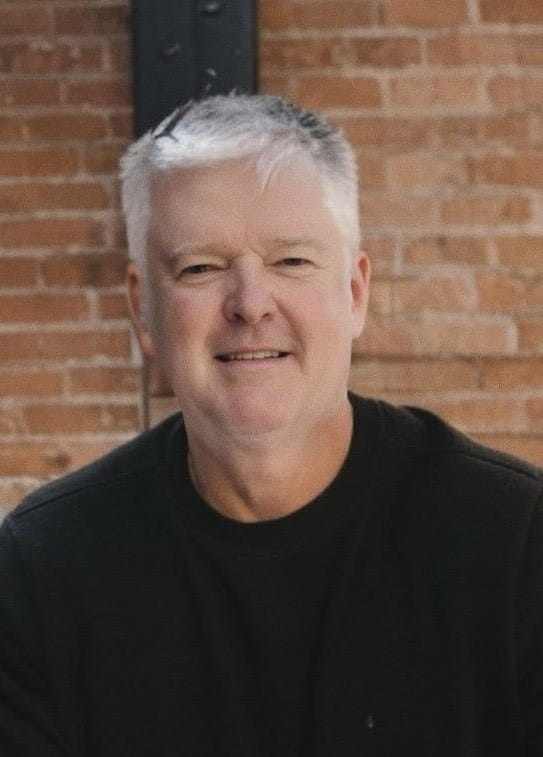
John W. Peace II is a syndicated feature writer, two-time Amazon bestselling author and fifth-generation Virginia farmer whose work focuses on rural America, Appalachian culture, history and the people who keep small-town America running. Learn more at www.JohnWPeace.com and visit www.BackPorchTalesAndTravels.com for more stories from across Appalachia and rural America.
Readers, please share. Newspapers and magazines wishing to republish this or another article, please just email me. urtopix1@gmail.com
Comments ()