You're Never Too Old to Click: SWVA Seniors Prove It
As banks, healthcare and other services move online, an award-winning RACE 1 program called Digital Literacy for Seniors at Mountain Empire Older Citizens in Big Stone Gap is helping older residents keep up with a changing world.
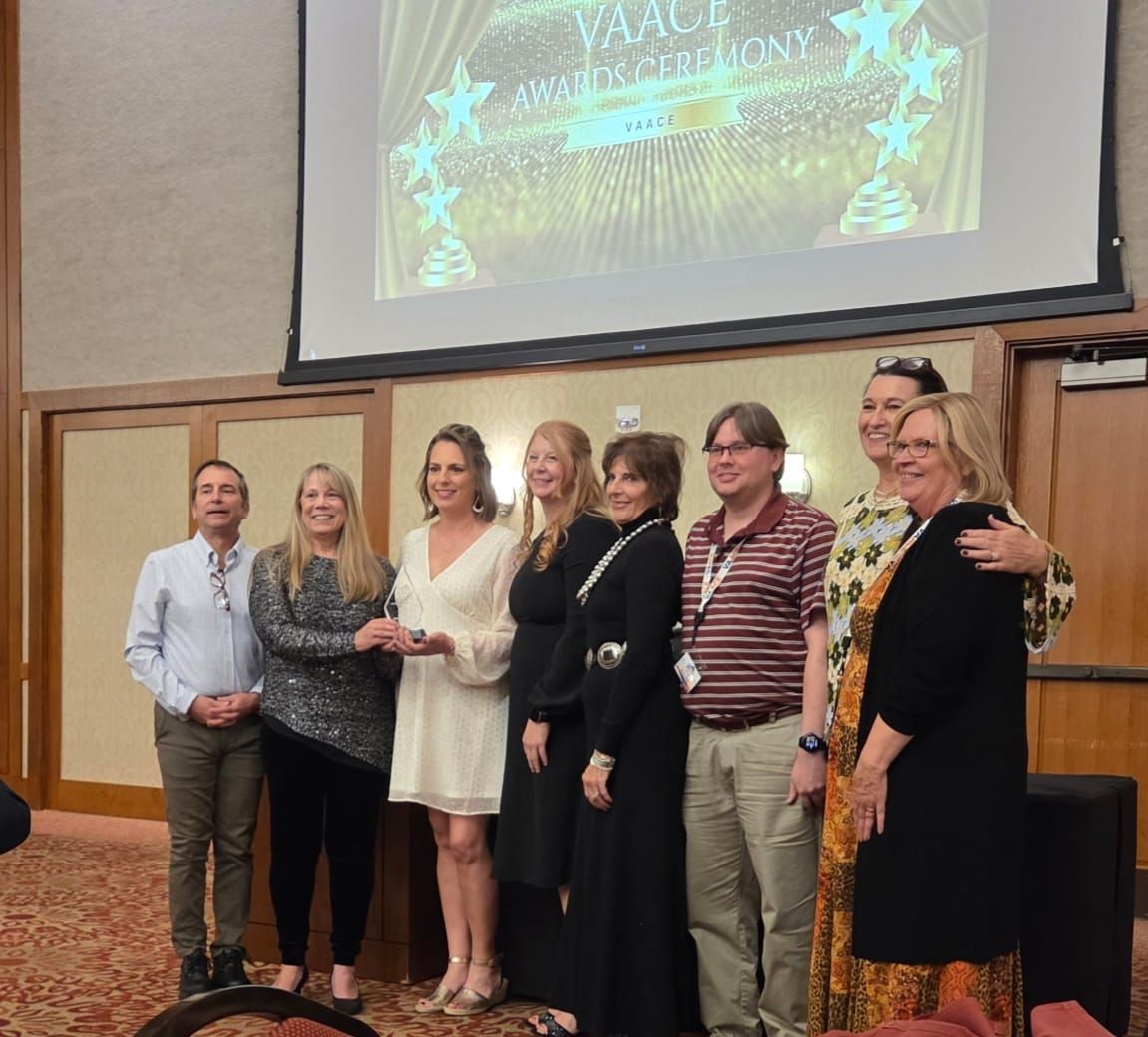
As banks, healthcare and other services move online, an award-winning RACE 1 program called Digital Literacy for Seniors at Mountain Empire Older Citizens in Big Stone Gap is helping older residents keep up with a changing world.
By John W. Peace II / www.JohnWPeace.com
There was a time here in the mountains of Southwest Virginia when getting a cellphone signal meant walking out on the front porch, holding your phone toward the sky, and turning around three times hoping to catch a bar or two. If that didn't work, you could always drive up on the ridge and try again.
For a lot of older folks, that wasn't long ago. Some spent most of their lives where internet service was nonexistent and cellphones were about as useful as a screen door on a submarine. Why learn to use something that wouldn't work where you lived?
Well, times are changing, and the rest of the world isn't waiting for everybody to catch up.
Banks are closing local branches, leaving customers to figure out online banking. Healthcare facilities have closed or consolidated services, and patients increasingly rely on telehealth appointments and online medical portals. Even checking a bank balance, scheduling a doctor's appointment, or refilling a prescription can require navigating a website or app.
For somebody who's never used a smartphone or computer, that's a pretty tall order, especially when the nearest bank or medical specialist might be miles away.
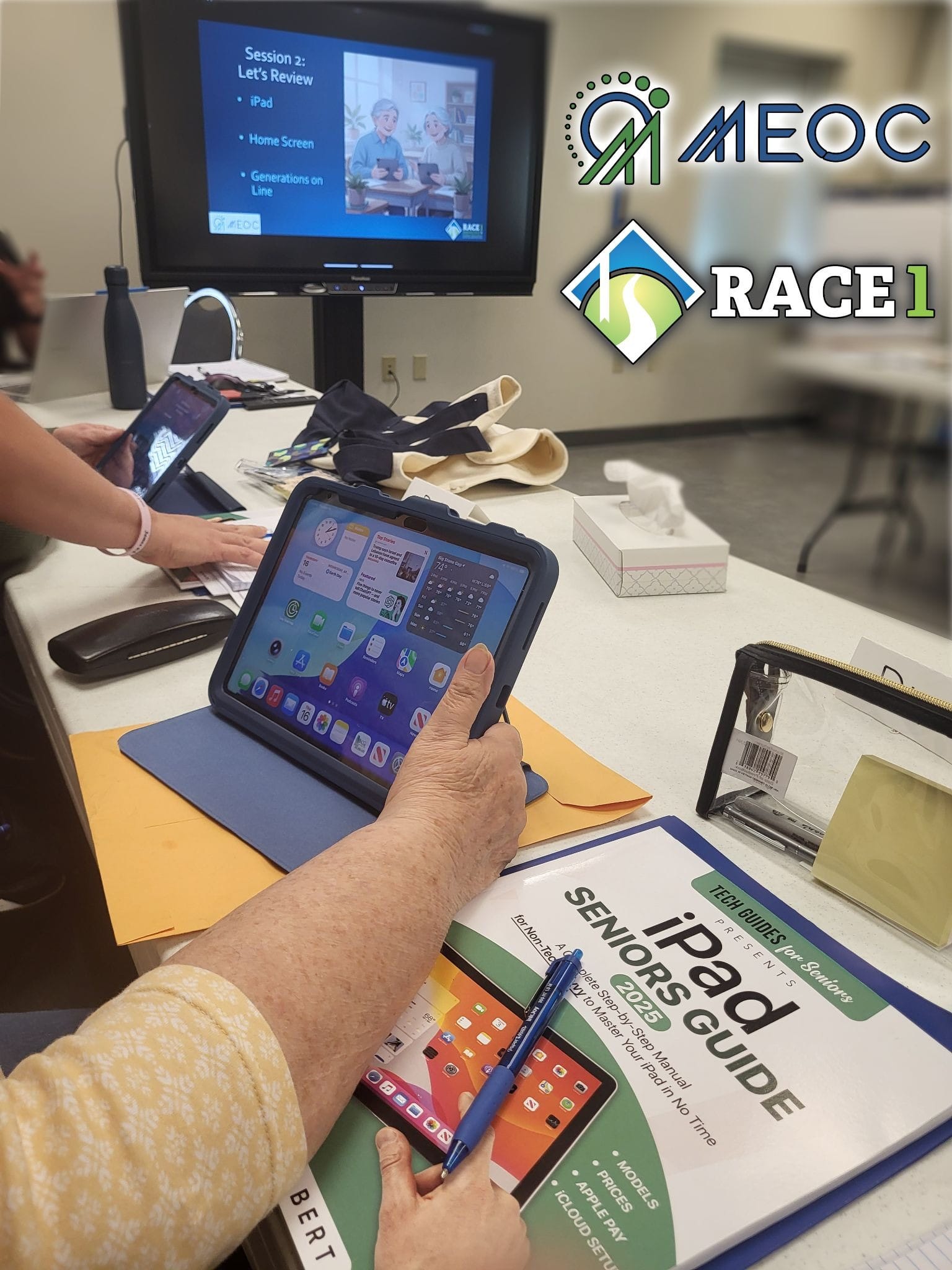
That's where Regional Adult and Career Education (RACE 1) comes in. Through its Digital Literacy For Seniors Project, RACE 1 is teaching older Southwest Virginians the technology skills they increasingly need for everyday life. Classes are conducted at the Mountain Empire Older Citizens (MEOC) facility in Big Stone Gap, where the two organizations have joined forces to make the program available to area seniors. Teaching digital literacy skills to adults is a core service of adult education programs nationally.
Participants ranging from their 60s clear up into their 90s are learning to operate iPads, send messages, make video calls, and protect themselves from internet scammers. And wouldn't you know it, the program has earned statewide recognition.
RACE 1, a program of the public school divisions in Lee, Scott, and Wise Counties and the city of Norton, offers free adult education and workforce training services across far Southwest Virginia since 1990. (myrace1.org) To learn more about their services call (276) 386-2433 or contact them at: https://myrace1.org/new-student-enrollment-form/. To learn more about free adult education services in Virginia outside this region, go to https://www.doe.virginia.gov/teaching-learning-assessment/specialized-instruction/adult-education/adult-education-regional-programs.
The Digital Literacy For Seniors Project recently received the 2026 Innovation in Adult Education Award from the Virginia Association for Adult and Continuing Education (VAACE) at its annual conference on the Virginia Tech campus.
I sat down with Marsha Craiger and Judy Samples at MEOC headquarters on November 6 to learn how the program came about. What began as an effort to help older residents become comfortable with technology has grown into a program that could serve as a model across Virginia.
The Rapha Foundation provided 80 new iPads, while University of Virginia support helped expand Starlink internet access for MEOC participants. Lonesome Pine Regional Library and other community partners joined the effort.
But handing somebody an iPad who's never used one before is a little like handing them the controls to the space shuttle. Somebody needs to explain what all those little pictures mean.
With help from curriculum consultant Anthony Nappi, RACE 1 instructors developed classes beginning with the basics. How do you turn the thing on? How do you swipe across the screen? What's that magnetic cover supposed to do and how to open the cover?
There's no shame in asking. These are folks who've spent their lives raising families, working jobs, and running farms. They just haven't needed to learn their way around a touchscreen.
Classes are limited to ten students, allowing individual attention. Participants learn to take pictures, send emails, text family members, and use FaceTime. But the real value goes beyond keeping up with the grandkids.
Consider somebody whose hometown bank has closed. Instead of driving to another community to check an account or pay a bill, they may be able to handle it online. Or someone living miles from a hospital who needs to review test results, contact a doctor, or attend a telehealth appointment.
What seems simple to someone who's used computers for their entire life can be downright intimidating to somebody who's never owned one. These skills are becoming necessities, not conveniences.
Then there's internet safety. The same technology that lets Grandma visit with her grandchildren also gives every two-bit crook with an internet connection a chance to come knocking. Instructors teach students to recognize suspicious websites, fraudulent messages, and offers promising something for nothing.
Around here, we were raised knowing that if something sounds too good to be true, it probably is. Turns out that advice works just as well on an iPad as around the kitchen table.
Every senior completing the program keeps an iPad and receives a Lonesome Pine Regional Library card, with the library's app installed. MEOC provides transportation, and graduates can return for additional help.
The partnership is expanding, too. MEOC transportation drivers receive iPad training for vehicle inspections, maintenance reports, and scheduling, with specialized banking and telehealth classes planned.
What struck me most wasn't the award or equipment. Many of these seniors simply lived where technology hadn't reached them. Now they're learning skills that allow them to conduct everyday business and stay connected without leaving home.
Imagine somebody in their 90s who remembers sharing a telephone line with three neighbors, now talking face-to-face with family halfway across the country.
That's quite a change in one lifetime.
And it proves you're never too old to learn something new. Sometimes you just need somebody patient enough to show you which button to push.

Comments ()