Woodbooger Season in Appalachia: Why America Still Believes in Bigfoot
“Don't go in those woods. The Woodbooger will get you!”
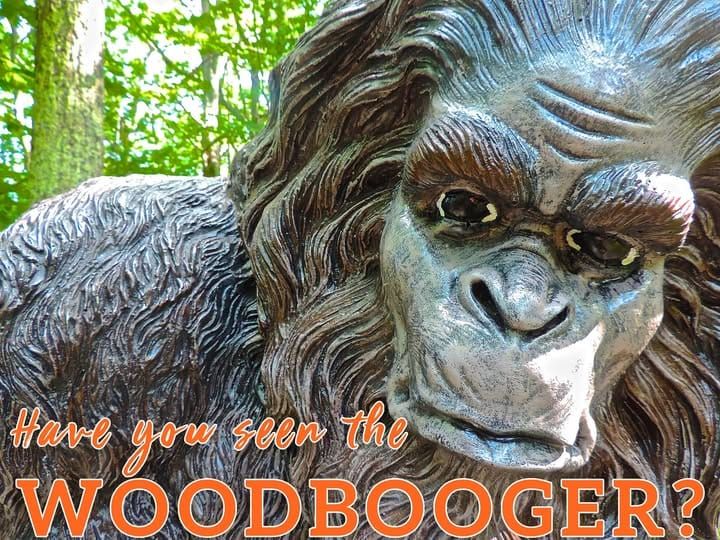
“Don't go in those woods. The Woodbooger will get you!”
That's how the story was handed down around Norton, Virginia. Not from a scientist or some fellow carrying night vision goggles and a bucket of plaster for making footprints. It came from a grandmother warning a child about wandering too far back into the woods. Around here, that was usually enough.
Norton is a small city tucked into the mountains of Southwest Virginia, where the streets give way pretty quickly to steep ridges, rhododendron thickets and enough hardwood forest for a critter to mind his own business without being bothered much. Above the city is Flag Rock, and beyond it the Appalachian Mountains climb toward High Knob, more than 4,000 feet above sea level. Get back in there after sundown and those woods can get mighty dark, mighty quick. That's good country for a Woodbooger.
Long before television crews came hunting Bigfoot in these mountains, Appalachian families had their own names for things waiting beyond the porch light. There were haints, boogers and booger men, along with a fair collection of other creatures Grandma could summon whenever young'uns weren't paying attention.
Then, in 2011, the folks from Animal Planet's Finding Bigfoot came to Southwest Virginia looking for America's most famous hairy fugitive. During the telling of the local story, somebody remembered what Grandma used to call him: the Woodbooger. The name stuck.
We Still Want to Believe
Now, I'm not telling you Bigfoot is real. I'm not telling you he ain't, either. That's between you, the Woodbooger and whatever made that noise behind your deer stand last November.
What we do know is that Americans have a mighty hard time giving up on him. Chapman University's Survey of American Fears found that the share saying Bigfoot was real rose from 13.5 percent in 2016 to 16.2 percent in 2017 and 20.7 percent in 2018. By that last survey, roughly one American in five was willing to leave the door cracked open for a big hairy critter wandering around someplace we haven't found him yet.
Americans Saying Bigfoot Is Real
2016 — 13.5%
2017 — 16.2%
2018 — 20.7%
Source: Chapman University Survey of American Fears
Bigfoot has plenty of company. In Chapman's 2018 survey, 57.7 percent agreed or strongly agreed that places can be haunted, 41.4 percent believed aliens visited Earth in our ancient past and 35.1 percent believed extraterrestrials had visited in modern times. Bigfoot's 20.7 percent almost makes the old boy seem respectable.
Maybe We Just Miss ‘Mystery’
Folklorists have spent a surprising amount of time asking why people believe in creatures nobody has managed to drag into the courthouse and introduce to everybody.
One explanation is that Bigfoot isn't really new. The Smithsonian has explored how Bigfoot, Sasquatch, the Yeti and similar creatures belong to an ancient tradition sometimes called the “Wild Man.” Cultures have spent centuries telling stories about humanlike creatures living beyond civilization, just outside the places where we feel safe. The names change and the mountains change, but the critter keeps hanging around.
There's another explanation I like even better. Maybe we just miss the mystery.
We've got satellites overhead and phones in our pockets that can tell us exactly where we're standing. You can pull up an aerial photograph of your own barn while sitting at the kitchen table eating a bologna sandwich. There's precious little blank space left on the map, and Bigfoot gives us some.
That's part of the appeal of cryptozoology, the search for creatures whose existence hasn't been scientifically established. It leaves open the possibility that there are still things out there we haven't found. Maybe you didn't see anything back in those woods, but you heard something, and your cousin swears he saw a hairy creature cross the road near High Knob back in 1987.
Of course, your cousin also swears he once outran a state trooper in a '78 Camaro, so we'll weigh the evidence accordingly.
Every Place Gets Its Own Critter
Cryptids also belong to places. West Virginia has Mothman. Florida has the Skunk Ape. The Pacific Northwest has Sasquatch. Across America, communities have discovered these old stories can be part folklore, part mystery and, if handled right, part tourism.
Here in Southwest Virginia, we've got the Woodbooger, and Norton has decided that if we've got one, we might as well invite folks over to help look for him.
The city declared Flag Rock Recreation Area a Woodbooger sanctuary, put up a statue overlooking the mountains and created an annual festival celebrating the creature along with the mountains, outdoor recreation, folklore and history surrounding Norton.
This year's Woodbooger Festival runs September 25–27, 2026, with activities in downtown Norton and at Flag Rock Recreation Area. There'll be music, food and craft vendors, children's activities, Bigfoot researchers, outdoor adventures, a trail race and, once darkness settles over the mountains, a Woodbooger Night Search.
That's where I'll remind everybody that black bears are definitely real.
If you've never been to Norton, this is a pretty good excuse to visit our little Southwest Virginia city. Walk around downtown, eat something you probably shouldn't, head up toward Flag Rock and enjoy one of the prettiest pieces of mountain country in Virginia. Then, if you're feeling brave, hang around until dark.
Festival information and schedule:
https://www.nortonva.gov/509/Woodbooger-Festival
Norton isn't alone. There's the WNC Bigfoot Festival in Marion, North Carolina; Smoky Mountain Bigfoot Festival in Townsend, Tennessee; West Virginia Bigfoot Festival in Summersville; Bigfoot Days in Remer, Minnesota; Bigfoot Daze in Willow Creek, California; and Sasquatch gatherings throughout Oregon and Washington. There are calling contests, eyewitness stories, night searches, 5Ks and enough merchandise to make you wonder whether Bigfoot hasn't been hiding all these years because he's busy running a T-shirt business.
Maybe that's the real attraction. People aren't necessarily showing up because they're convinced an undiscovered giant primate is hiding behind the Walmart. They're coming because folklore is fun, mystery is fun, and sitting around telling stories about something that might be out there is something we've apparently enjoyed since the first people gathered around a fire and heard something moving beyond the light.
Come late September, the sun will go down behind the mountains above Norton VA. Somewhere past Flag Rock toward High Knob, the hardwoods will turn black against the evening sky and somebody will hear a limb crack back in the timber. Maybe it'll be a deer, maybe a bear, maybe just the wind.
Or maybe Grandma knew what she was talking about when she told those young'uns not to wander too far into the woods.
The Woodbooger might get ya.

From King Coal and the Coal Wars to Woodboogers, Granny Witches, Hillbilly Hoo-Doo, Melungeons, moonshine legends, and mountain folklore, the mountains around Big Stone Gap VA have inspired storytellers for generations.
No wonder this region helped inspire bestselling novels like The Trail of the Lonesome Pine, Adriana Trigiani’s Big Stone Gap books and upcoming television series, and just over the mountain in Harlan, Kentucky, the world of Justified. Experience more Big Stone Gap stories with A Boy From Crackers Neck, The Keokee Triangle and the upcoming Ghosts of the Moonshine Mafia.
Welcome to:
“The Big Stone Gap Storyverse in Appalachia”
Where the mountains still remember.


Comments ()