When Death Came Knocking
“Back Porch Tales & Travels is Paul Harvey meets Charles Kuralt, telling stories of the people, places, and backroads America too often passes by. Good storytelling with an Appalachian soul.” — J.T. Adams
“Back Porch Tales & Travels is Paul Harvey meets Charles Kuralt, telling stories of the people, places, and backroads America too often passes by. Good storytelling with an Appalachian soul.”
— J.T. Adams
The Old Superstitions of Appalachia
Years ago in the mountains, death didn't always arrive unannounced. Sometimes the dog told you.
Maybe a bird flew against the window. Maybe a cow bawled after dark for no good reason. Or maybe the family dog commenced howling before the moon came up, and somebody sitting on the back porch stopped rocking long enough to say, “Lord, I hope that ain't a sign.”
Everybody knew what kind of sign they meant.
Death omens were part of old Appalachian folklore, handed down through families much like recipes, Bible verses and advice about when to plant beans. A bird striking a window could mean death was coming. A dog howling at the wrong time might be another warning. Virginia folklore even told of old clocks that hadn't worked in years suddenly ticking or striking before a death.
Nowadays we'd probably blame a loose spring on the clock, the dog on the neighbor's cat and the cow on whatever it is cows get aggravated about. Still, I'd just as soon that old clock stay quiet.
When Death Came Into the House
To understand all this, you have to remember that death once occupied a different place in Appalachian life. It wasn't hidden behind hospital doors or immediately handed over to funeral professionals.
Death came home.
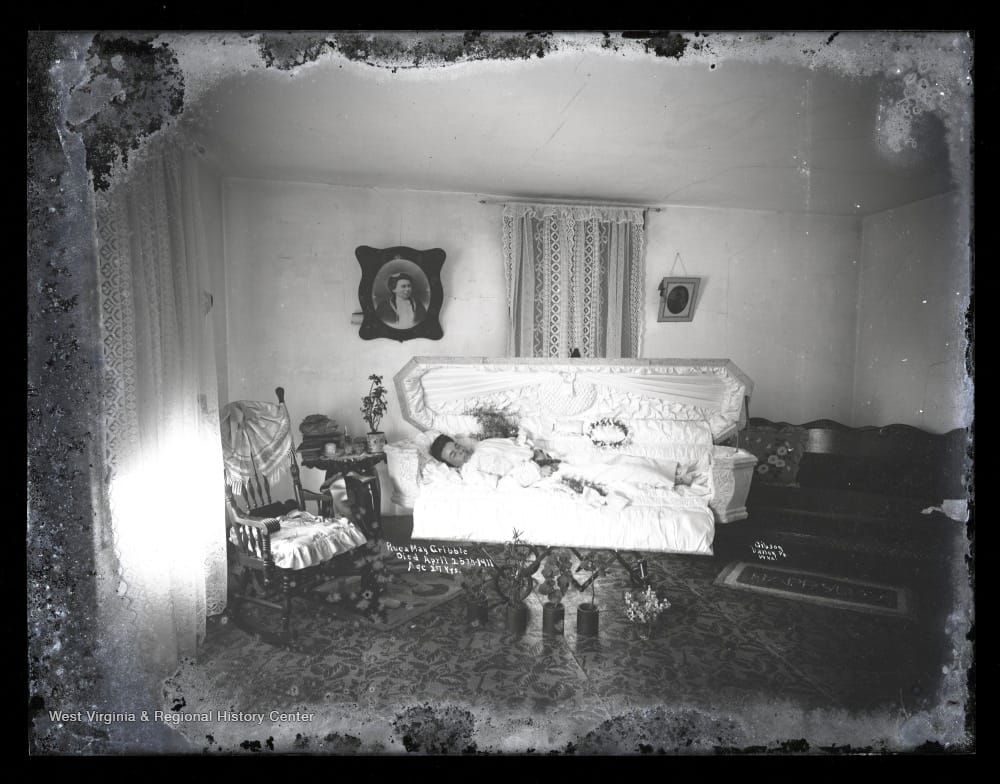
People commonly died there, surrounded by family and neighbors. Afterward, those same people helped prepare the body, cook the food, see about the coffin, dig the grave and sit through the night.
James K. Crissman interviewed more than 400 mountain residents while researching his 1994 book, Death and Dying in Central Appalachia: Changing Attitudes and Practices. His work documented everything from the death watch and preparation of the body to homemade coffins, hand-dug graves, wakes and funerals. The University of Illinois Press says his research emphasizes “the importance of family and ‘neighborliness’ in mountain society.”
In those days, there wasn't necessarily a funeral-home employee coming through the door.
The neighbors came instead, and they came to work.
Women might wash and dress the body while somebody started cooking. Men saw about the grave and sometimes built the coffin. Before refrigeration and modern embalming, the deceased might be placed on a “cooling board,” occasionally fashioned from an old door.
Then there were the rules, and Lord help you if Granny caught you breaking one.
Clocks might be stopped at the time of death. Mirrors could be covered or turned toward the wall. One belief held that the soul might become trapped inside a mirror; another warned that seeing the dead person's reflection could mean you'd be next.
That'd make a fella mighty careful about checking his hair.
Sitting Up With the Dead
The dead weren't supposed to be left alone, either. Family, friends and neighbors would “sit up” through the night, praying, singing hymns, drinking coffee, eating and telling stories.
Grandpa was still in the same house where he'd eaten breakfast, read his Bible, fussed about the weather and told the same story fourteen hundred times. Death wasn't somewhere else. It was right there in the parlor, and the living sat beside it.
That closeness continued in ways that seem strange today. We found that while researching another Back Porch Tales & Travels story about hair art made from the hair of deceased family members. Hair could be carefully woven into elaborate designs and framed as a keepsake.
To us it might look spooky. To them, it was remembrance.
We explored that tradition in What We Learned About Death, Memory and Hair Art in Big Stone Gap, VA.
Maybe It Wasn't About Superstition
It's easy to chuckle at these old customs. A bird hits the window and we Google it; Great-Great-Granny probably reached for the Bible.
But maybe calling it all superstition misses the bigger story.
Cover the mirror. Stop the clock. Wash the body. Cook some food. Dig the grave. Sit through the night and sing a hymn. None of it could stop death, but it gave the living something to do.
In mountain communities where doctors might be miles away and death from childbirth, disease, mines, timber, farming or plain bad luck was part of life, neighbors didn't send condolences from a distance.
They showed up.
Maybe that's the rest of the story hiding behind those covered mirrors, stopped clocks and howling dogs. Nobody was supposed to face death alone, not the dying, not the dead and especially not the family left behind.
Most of us don't cover mirrors anymore, and nobody is particularly anxious to bring back the cooling board.
But some things hang around these mountains.
Let a bird smack hard against your kitchen window tomorrow morning, then let the dog start howling after dark for no earthly reason.
Tell yourself you don't believe one blessed word of that old mountain foolishness.
That's fine. But maybe, just maybe…

From King Coal and the Coal Wars to Woodboogers, Granny Witches, Hillbilly Hoo-Doo, Melungeons, moonshine legends, and mountain folklore, the mountains around Big Stone Gap VA have inspired storytellers for generations.
No wonder this region helped inspire bestselling novels like The Trail of the Lonesome Pine, Adriana Trigiani’s Big Stone Gap books and upcoming television series, and just over the mountain in Harlan, Kentucky, the world of Justified. Experience more Big Stone Gap stories with A Boy From Crackers Neck, The Keokee Triangle and the upcoming Ghosts of the Moonshine Mafia.
Welcome to:
“The Big Stone Gap Storyverse in Appalachia”
Where the mountains still remember.

Comments ()