When a Town Lost Its Boys
Stephen King writes horror fiction about small towns haunted by tragedy. Bedford, Virginia, lived one. On June 6, 1944, one of America's smallest communities suffered one of the heaviest losses of D-Day.

When a Town Lost Its Boys
Stephen King writes horror fiction about small towns haunted by tragedy. Bedford, Virginia, lived one. On June 6, 1944, one of America's smallest communities suffered one of the heaviest losses of D-Day.
They grew up together.
They went to school together, played ball together, chased girls together, and sat in the same church pews on Sunday mornin'. Most worked on farms or around small family businesses. Bedford, Virginia, wasn't a city. It was a rural town tucked into the foothills of the Blue Ridge Mountains, home to only about 3,500 people in 1944. Everybody knew everybody, and if somebody's cow got out or a barn caught fire, word traveled across town before supper.
Then Uncle Sam came callin'.
A lot of Bedford's boys joined the Virginia National Guard together, around thirty in all. That wasn't unusual in those days. Friends enlisted together. Cousins enlisted together. Brothers enlisted together. They trained together, crossed the Atlantic together, and on June 6, 1944, they headed toward Omaha Beach together as part of Company A, 116th Infantry Regiment.
The sun had barely come up over the coast of France when the ramps of the landing craft dropped. German machine guns opened up. Mortars exploded overhead. Men splashed into the cold water and tried to reach the beach under a storm of bullets. The Bedford boys were among the first Americans to hit Omaha Beach, and many never got any farther than the sand.
By the end of D-Day, nineteen young men from Bedford had been killed. Another Bedford soldier would die later from wounds suffered during the Normandy campaign. For a town of only 3,500 people, the loss was almost beyond comprehension. Larger cities lost more men in raw numbers, but few places in America lost so many sons from one community on a single day.
Back home, families gathered around radios listening for news from Europe. Mothers prayed. Fathers worried. Sweethearts waited. Nobody yet knew what had happened on that distant stretch of French coastline. The invasion itself was headline news, but the human cost would take days and weeks to reach rural Virginia.
Then the telegrams started arriving.
One family received bad news, then another. Soon, a knock at the front door became something every household feared. Grief settled over Bedford like a cold mountain fog. Nearly every church, every classroom, every road leading out of town seemed connected to one of the young men who had been killed. Some families lost sons. Others lost brothers, cousins, neighbors, or lifelong friends. In a town that small, everybody knew someone who wasn't coming home.
That's what makes Bedford different from most wartime stories. This wasn't a place where people passed each other anonymously on crowded city streets. These were farm boys and small-town kids who had spent their entire lives together. When one family hurt, the whole town hurt.
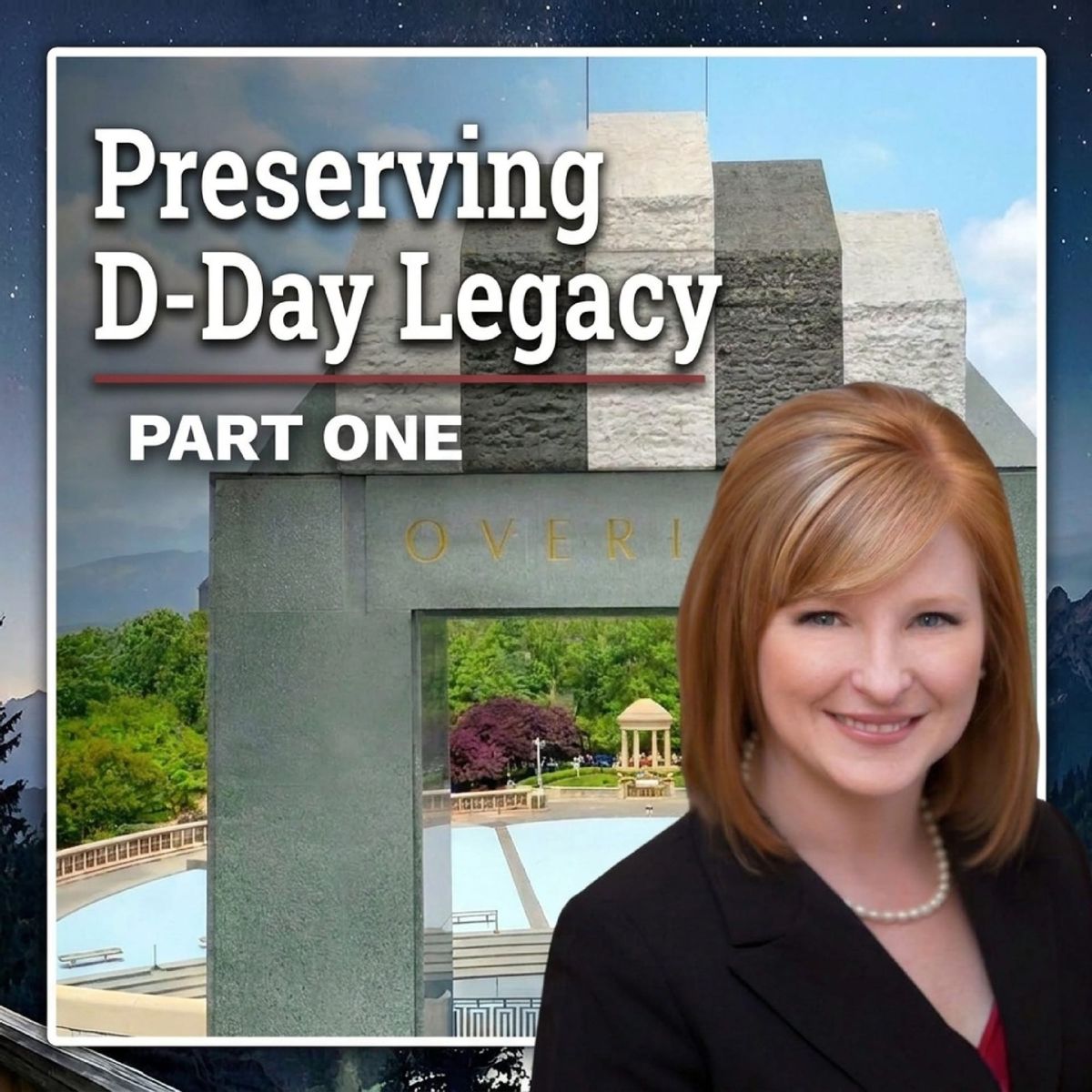
That sacrifice is why the National D-Day Memorial stands in Bedford today.
It would have been easy to place it in Washington, D.C., New York City, or beside some famous military installation. Instead, it stands in Bedford because this little rural Virginia town came to represent thousands of small American communities that answered the nation's call during World War II and paid a terrible price for freedom.
When visitors walk through the memorial grounds today, they aren't just remembering a battle fought on a beach half a world away. They're remembering farm boys, mechanics, clerks, and students who left the hills and valleys of Virginia to fight Nazi Germany. They are remembering young men who answered their country's call without hesitation and stepped into history without ever knowing it.
The Bedford Boys didn't think they were becoming symbols. They thought they were doing a job that needed doing. More than eighty years later, their story remains one of the clearest reminders that freedom has always carried a cost, and sometimes that cost is paid all at once by one small rural town.
One reason stories like the Bedford Boys still matter is because history and Hollywood has a way of remembering the generals, the politicians, and the famous battles while forgetting the boys who actually carried the rifles. Rural America has sent generations of its sons and daughters off to war, and too often their stories fade away as the years pass.
That's why I wrote A Boy From Crackers Neck. My own family has roots in those stories. My grandfather, Captain Jimmie Galloway, flew a B-17 bomber over D-Day, over Europe throughout World War II. Like so many rural families, ours carried its own stories of service, sacrifice, and coming home. I believe those stories deserve to be told. The best stories are yet to be explored!
The Bedford Boys remind us that freedom wasn't won by names carved into history books alone. It was won by farm boys, coal miners' sons, factory workers, and young men from little towns that most Americans have never heard of. If we forget their stories, we forget part of who we are.
That's why we keep telling them.
And why we always should.
—----------------------------------------------------------------------------------------

From the Back Porch
Stories like the Bedford Boys are why I wrote A Boy From Crackers Neck. Growing up on our family dairy farm in Big Stone Gap, I was raised on stories of World War II, including those of my grandfather, Captain Jimmie Galloway, a B-17 pilot who flew thirty missions over Nazis Europe. It's a story about ordinary folks from small towns who found themselves in extraordinary times.
Big Stone Gap has inspired storytellers for generations, from John Fox Jr.'s The Trail of the Lonesome Pine to the bestselling Big Stone Gap novels of Adriana Trigiani and recently with the tv series Justified. Today, those stories continue through what I call the Big Stone Gap Storyverse, a world of Appalachian history, folklore, family farms, coal camps, and mountain characters. If you enjoy stories of rural America and the people who helped shape it, A Boy From Crackers Neck is available on Amazon.
Where the mountains still remember.
Big Stone Gap, VA

Comments ()