Before Everybody Ate Turkey: Thanksgiving in Appalachia and Across Rural America
From chicken and dumplings in the Appalachian coalfields to Cajun gumbo and Minnesota wild rice, Thanksgiving hasn't always looked like the ones depicted in the Hallmark Channel movies.

From chicken and dumplings in the Appalachian coalfields to Cajun gumbo and Minnesota wild rice, Thanksgiving hasn't always looked like the ones depicted in the Hallmark Channel movies.
By John W. Peace II / www.JohnWPeace.com
There was a time in rural America when Thanksgiving dinner depended less on what was at the grocery store and more on what was running around the barnyard, growing in the garden, or hanging in the smokehouse.
Nobody was thumbing through a holiday catalog looking for the perfect centerpiece. If you had a good laying hen that had quit laying, a few bushels of potatoes in the cellar, and some green beans your grandmother had dried back in August, you were well on your way to Thanksgiving dinner.
The turkey might be America's official-looking Thanksgiving bird, but it wasn't always the guest of honor in rural kitchens. Depending on where you lived, the holiday meal could look mighty different, and nobody figured they were missing out on anything.
In the coalfields of Southwest Virginia and throughout Appalachia, chicken and dumplings were a Thanksgiving tradition in many households. Turkeys could be expensive or hard to come by, but nearly every farm had chickens. An old hen that had quit producing eggs could still make a pot of broth rich enough to keep the whole family coming back for seconds.
These weren't the fluffy little dumplings floating around in soup, either. Mountain cooks rolled their dough out flat, cut it into strips, and dropped it into simmering chicken broth. The finished product was thick enough to stick to your ribs until Christmas, which wasn't a bad thing considering how cold those mountain winters could get.
Nothing much went to waste. Some cooks even saved the developing egg yolks from inside a butchered hen and dropped them into the pot. Today somebody would probably call that an Appalachian delicacy and charge thirty dollars for a bowl of it.
Alongside the chicken came cornbread dressing, home-cured ham, leather britches (green beans dried for winter), turnip greens, and apple stack cake. It wasn't fancy cooking. It was what folks had put away during the growing season, and it tasted just fine.
Head south into Georgia, Alabama, Mississippi, and the Carolinas, and the Thanksgiving table took on a different personality. Cornbread dressing became serious business, accompanied by collard greens, sweet potatoes, field peas, macaroni and cheese, and pecan pie.
In many Black families across the South, those dishes carry generations of culinary knowledge shaped by West African foodways and Southern agriculture. Recipes were handed down from one generation to the next, usually without much written instruction. A grandmother might tell you to add a little of this and a handful of that, and somehow it came out perfect every time.
Of course, every Southern family claims their grandmother made the best dressing. You can argue politics, religion, and college football at Thanksgiving dinner, but criticizing somebody's granny's cornbread dressing is a good way to spend the rest of the afternoon eating by yourself.
Down in Louisiana, Thanksgiving might feature a turkey, but that bird has plenty of competition. Gumbo, dirty rice, oyster dressing, and seafood have long been part of Cajun and Creole cooking. Some families roast their turkey, others fry it, and plenty season it with enough Cajun spices to make you forget what kind of bird you're eating.
Travel north into Minnesota and the Great Lakes country, and wild rice takes its place on some holiday tables. Known as manoomin in Ojibwe, wild rice has sustained Indigenous communities for generations. It finds its way into soups, stuffing, and casseroles, sometimes served alongside venison, squash, and cranberries.
For farming families across the Midwest, Thanksgiving also meant another harvest was finally behind them. The corn was gathered, the machinery put away, and everybody could sit down without worrying about the combine breaking down. At least until somebody remembered the tractor still needed fixing.
Up in rural New England, the holiday table reflected what grew in the rocky soil and could survive a long winter. Apples, cranberries, squash, potatoes, and pumpkins became staples. One old favorite was Indian pudding, a slow-cooked mixture of cornmeal, milk, molasses, and spices. It wasn't much to look at, but neither was a lot of good country cooking.
Out in New Mexico and the Southwest, Thanksgiving sometimes shares the table with tamales, posole, roasted green chile, and red chile sauces. These foods have deep Indigenous and Hispanic roots and are especially popular during winter holiday gatherings. Making tamales can become a family gathering itself, with several generations working around the kitchen table.
In New Mexico, folks take their chili seriously. The official state question is "Red or Green?" Fortunately, asking for both is acceptable, which seems like the sensible thing to do when somebody offers you two good choices.
Along the Pacific Northwest coast, salmon has sustained Indigenous communities for thousands of years. Salmon, berries, roots, and other local foods remain important to many families and traditional harvest gatherings. For Native Americans, Thanksgiving carries different meanings, including remembrance of the painful history that followed European settlement. Their traditions remind us that people were gathering, harvesting, and giving thanks on this land long before anybody heard of Plymouth Rock.
What ties all these regional traditions together isn't a particular dish. It's the way families made use of what the land provided and what they had the good sense to preserve. Mountain families butchered chickens and cured hams. Southern cooks made cornbread dressing. Great Lakes communities harvested wild rice, and New Englanders stored apples and squash for the winter.
Nobody needed a television chef to explain how to cook Thanksgiving dinner. Most families already had somebody in the kitchen who knew more about cooking than any television personality ever would, and she'd likely tell you so if you got in her way.
These days, you can buy an entire Thanksgiving dinner without ever setting foot in a garden, barn, or smokehouse. Nothing wrong with that, but somewhere along the way, we've lost a little of the history behind what's on our plates.
Those old recipes tell stories about where families came from, what they had to work with, and how they managed to get by. They're worth remembering, even if the only person who knows how to make them measures everything by the handful.
So this Thanksgiving, whether you're eating gumbo in Louisiana, wild rice in Minnesota, or chicken and dumplings in Southwest Virginia, ask somebody where that family recipe came from. You might learn a little history, hear a good family story, and maybe even get a second helping.
After all, Thanksgiving was never really about having the biggest turkey on the table. It was about having enough to share and somebody to share it with.
And if somebody happens to bring a pot of good chicken and dumplings, I wouldn't complain.
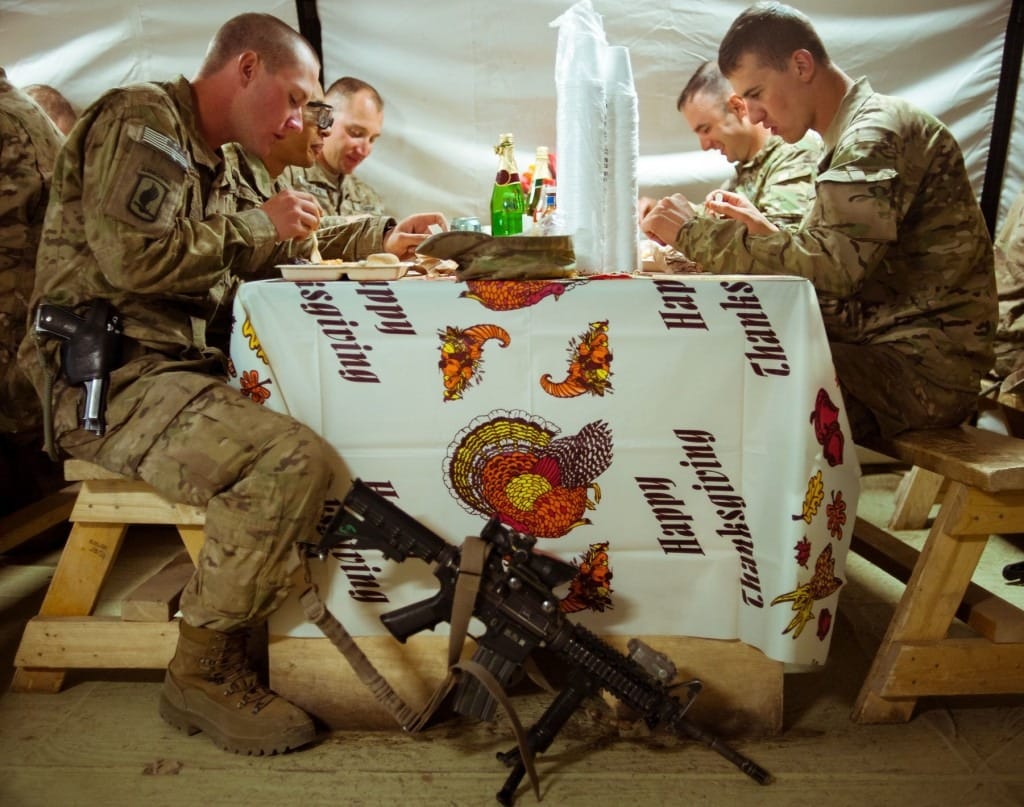
Photo Credit: Wikimedia Commons
For all of our service men and women who are far from home protecting our freedom, Happy Thanksgiving!

Comments ()