As America Celebrates 250 Years, We Look Back at 10 Days That Changed the Nation in the 20th Century
As America Celebrates 250 Years, We Look Back at 10 Days That Changed the Nation in the 20th Century
From the Wright brothers taking flight to Pearl Harbor, the assassination of JFK and Americans walking on the Moon, some days changed our country forever. One of them was June 6, 1944, and one little Virginia town paid a terrible price.
America is celebrating its 250th birthday this year, which seems like a pretty good time to look backward.
Two hundred and fifty years is a lot of history. Wars, presidents, depressions, inventions, victories and a fair number of mistakes we'd probably just as soon forget. But every now and then comes a single day when something happens and America wakes up the next morning a different country.
Picking the ten most important days of the 20th century is a good way to start an argument. You can shuffle the deck any way you please, but some cards are staying in the hand.
December 17, 1903, the Wright brothers flew at Kitty Hawk. August 18, 1920, the 19th Amendment was ratified. October 29, 1929 (The Great Depression), Black Tuesday. March 4, 1933, Franklin Roosevelt took office. December 7, 1941, Pearl Harbor. June 6, 1944, D-Day. August 6, 1945, Hiroshima. November 22, 1963, President Kennedy was assassinated. July 20, 1969, Americans walked on the Moon.
Historians can argue about the order until the cows come home.
But D-Day stays in the hand.
Our recent Back Porch Tales & Travels story, "When a Town Lost Its Boys," told what June 6, 1944, meant to Bedford, Virginia, a rural town of roughly 3,500 people where folks went to the same schools, sat in the same churches, played ball together and knew whose boy belonged to which family.
Then Uncle Sam came callin'.
Bedford's young men trained together, crossed the Atlantic together and headed toward Omaha Beach together. Many never came home.
Bedford suffered what is recognized as the highest known per capita D-Day loss of any American community. Those boys weren't statistics. They were sons, brothers, sweethearts, classmates and neighbors. Their sacrifice is a major reason the National D-Day Memorial stands in Bedford today.
That story led us to another one, and this time we turned on the cameras.
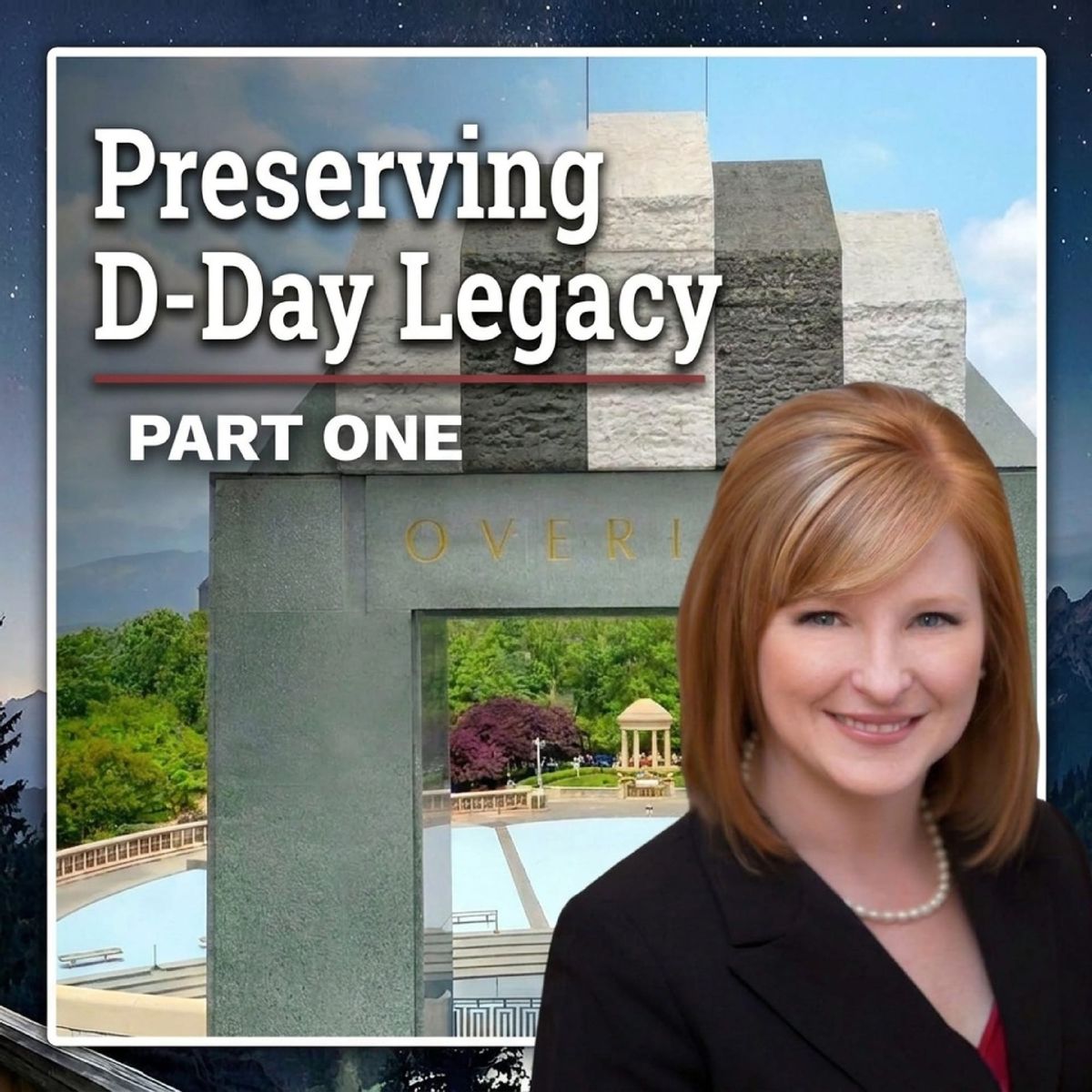
For a special two-part Back Porch Tales & Travels video podcast, we sat down with Angela Lynch of the National D-Day Memorial to talk about the Bedford Boys, how the Memorial came to be and why these stories still matter more than eighty years later.
In Part One, "More Than a Memorial: Keeping the Story of D-Day Alive," Angela takes us behind the Memorial and explains why Bedford became its home.
Watch Part One:
In Part Two, "The Higgins Boat, the Wedding Ring, and a Soldier's Bible," history gets personal. Sometimes an old Bible or a wedding ring tells you more about war than a thousand pages in a history book.
Watch Part Two:
That's what we're trying to do with Back Porch Tales & Travels. Remember the big history, but never forget the folks who lived it.
As America celebrates 250 years, we'll hear plenty about presidents, generals and famous names. We ought to remember the farm boys, factory workers, coal miners' sons and small-town kids, too. History happened to somebody's daddy, somebody's brother, somebody's sweetheart and somebody's boy.
June 6, 1944, was one of the days that changed America.
In Bedford, Virginia, they still remember the boys who paid the bill for FREEDOM.
From the Back Porch
Stories like the Bedford Boys are why I wrote A Boy From Crackers Neck. Growing up on our family dairy farm in Big Stone Gap, I was raised on stories of World War II, including those of my grandfather, Captain Jimmie Galloway, a B-17 pilot who flew thirty missions over Nazis Europe. It's a story about ordinary folks from small towns who found themselves in extraordinary times.
Big Stone Gap has inspired storytellers for generations, from John Fox Jr.'s The Trail of the Lonesome Pine to the bestselling Big Stone Gap novels of Adriana Trigiani and recently with the tv series Justified. Today, those stories continue through what I call the Big Stone Gap Storyverse, a world of Appalachian history, folklore, family farms, coal camps, and mountain characters. If you enjoy stories of rural America and the people who helped shape it, A Boy From Crackers Neck is available on Amazon.
Where the mountains still remember.
Big Stone Gap, VA

Comments ()