More Than a Marker: Remembering James A. Bland High School
Virginia's segregation laws decided where those children could go to school. They did not get to decide what those children would become.
There is no way to tell the story of James A. Bland High School without first acknowledging why it existed. Virginia's system of segregated education was built on the false and terrible premise that people should be separated because of the color of their skin. It denied generations of Black Virginians equal opportunities and left lasting scars across the Commonwealth. There is nothing nostalgic about that history, nor should there be.
Yet history is rarely simple. Within an unjust system, students, teachers, parents and community leaders built something remarkable. Bland High School became remembered not for the laws that created it, but for the pride, discipline, friendships and opportunities created inside its walls. Those accomplishments belong to them, not to the system that forced them into a separate school.
To understand why a segregated Black high school came to stand in Big Stone Gap VA, though, we have to go back further.
We have to go underground.
The coal boom transformed Wise County beginning in the early 1900s. Companies needed workers, lots of them, and went looking beyond these mountains for labor. The workforce that developed included local Appalachians, African Americans and European immigrants.
During his keynote address at the August 8th dedication of a new Virginia historical marker for Bland High School, Dr. William H. Turner spoke about coal companies recruiting Black miners from Alabama, where African Americans already had experience working underground. Men came into the Appalachian coalfields for jobs. Families followed. Children were born here. Churches, neighborhoods and communities grew.
That history helps answer a question someone might ask today. Why were there enough Black children in Wise and Lee counties to need a regional Black high school?
Part of the answer was buried beneath these mountains.
Before daylight, miners would disappear into the mountain, miners from every walk of life. Some grew up in the hollows of Wise County. Others came from Alabama and elsewhere in the South looking for work. A few were sons of immigrants who crossed an ocean before crossing the Cumberland Mountains.
Underground survival demanded trust. Roof falls, methane and coal dust didn't much care about a man's race or where his daddy was born.
Then the miners came back into daylight.
Above ground, Virginia's laws and customs enforced separation. Families had to live in different sections of the same coal camp or completely separate housing camps. Black and white children attended separate schools. Men who worked for the same coal company and depended upon one another underground returned to a society that divided their children by the color of their skin.
Eventually, one of those schools was James A. Bland High School.
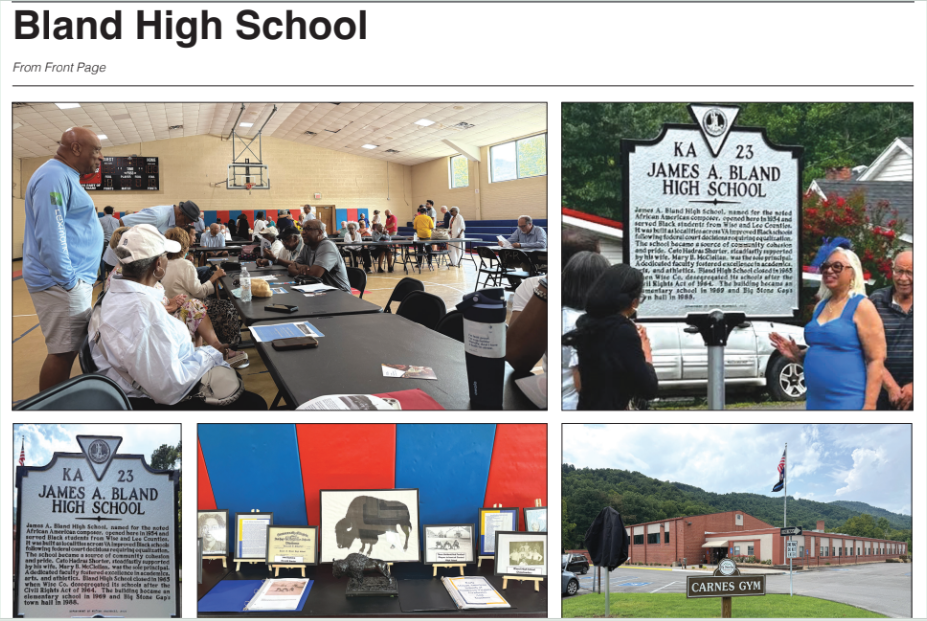
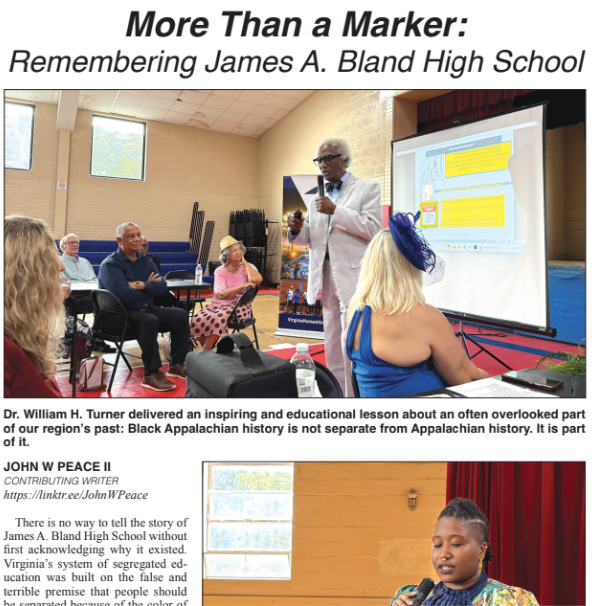
Named for noted African American composer James A. Bland, the school opened in Big Stone Gap in 1954, serving Black students from Wise and Lee counties. Cato H. Shorter was its sole principal, supported by his wife, educator Mary Beatrice McClellan Shorter. Bland's faculty fostered excellence in academics, arts and athletics. The school closed in 1965 when Wise County desegregated its schools. The building later became an elementary school and, in 1988, Big Stone Gap Town Hall. Bland was listed on the National Register of Historic Places on November 7, 2024.
On August 8, 2026, classmates came home.
I had the privilege of sitting beside the day's emcee, Dr. Je’ G. Judson of New Orleans, granddaughter of Cato and Mary Shorter. After we introduced ourselves, she looked around the old gymnasium as the crowd grew larger and larger.
"What a big crowd, I didn't expect anywhere near this many people, isn't this wonderful!"
It was.
Some traveled only a few miles. Many others came hundreds of miles. I met local residents Ruth Hoskins and Paula Martin Adams, president of the ATCB Alumni Association. Alumni came from as far away as Ohio. Cerwin and Gloria Walker traveled from Louisville, Kentucky.
Gloria proudly told me local folks might remember her by her maiden name, Gloria Jean Bush. Then she told me something with the kind of pride that doesn't fade much with time.
She was Class of 1965, the last class to graduate from Bland High School.
There was history written on the marker outside. There was living history sitting inside that gym.
The recognition itself was years in the making. Dr. Jinny Turman of the University of Virginia's College at Wise described how public history research grew into a multi-year effort involving students, faculty, alumni, descendants and community partners, ultimately helping secure historic recognition for the school.
The historical marker may have been manufactured somewhere else, but much of the history written on it was dug out right here at home.
And like a good Fourth of July fireworks show, the ceremony saved one of the biggest for last.
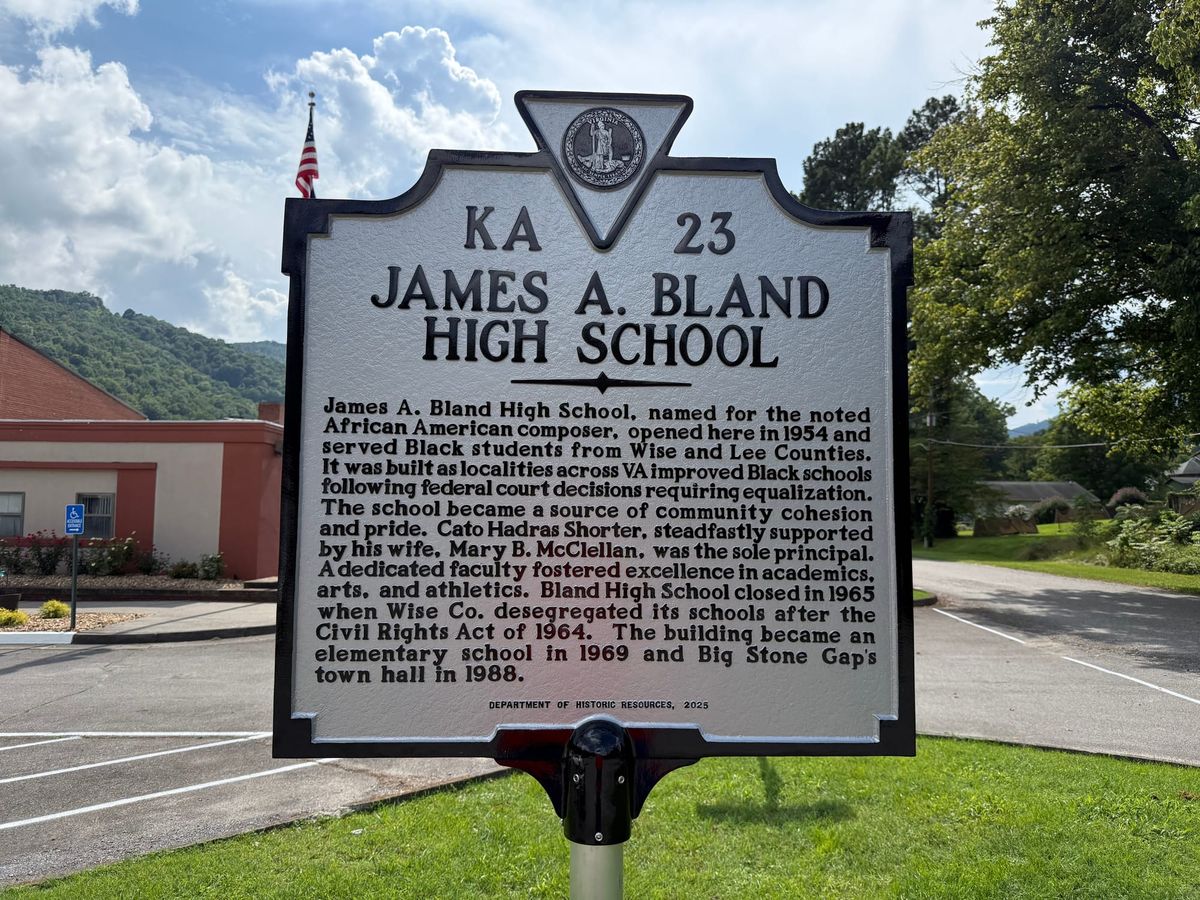
Dr. William H. Turner delivered an inspiring and educational lesson about an often overlooked part of our region's past: Black Appalachian history is not separate from Appalachian history. It is part of it.
Turner's roots run deep here. His father, William Earl Turner, was born in Coeburn in 1917. Both of Turner's grandfathers, his father, four uncles and his older brother worked in the coalfields of Southwest Virginia, southern West Virginia and eastern Kentucky. Turner went on to become one of the nation's leading scholars of Black Appalachia.
The laws that created James A. Bland High School are gone, and good riddance to them. But the students went on to college, military service, careers and lives their teachers helped prepare them for. More than sixty years later, they still come home.
Virginia's segregation laws decided where those children could go to school.
They did not get to decide what those children would become.
John W Peace II

Comments ()