Maybe It’s Time for Another Tractorcade
In 1979, American farmers drove their tractors to Washington because the numbers didn't work anymore. Nearly half a century later, some of those numbers are starting to look mighty familiar.
In 1979, American farmers drove their tractors to Washington because the numbers didn't work anymore. Nearly half a century later, some of those numbers are starting to look mighty familiar.
The 1979 Tractorcade isn't something I stumbled across in a history book or watched in an old documentary. It's part of my family history.
My grandfather Eugene Peace was a wheat and soybean farmer in Hanover County, Virginia, and when farmers decided they'd had about enough and started toward Washington, he went with them. “He drove his International tractor, the one he called ‘Big Red.’” So when I look at those old photographs of tractors lined up around the nation's capital, I see more than an interesting piece of American history. Somewhere in that story is my grandfather.
And lately I've been wondering if those farmers weren't trying to tell us something we're having to learn all over again.
When Farmers Came to Washington
The American Agriculture Movement got started in 1977, when farmers across the country were watching commodity prices fall behind the cost of raising the crop. It was an old problem with a new urgency.
You could raise a good crop, work from daylight until you couldn't see what you were doing anymore, sell everything you grew and still wonder how in the devil you were going to pay the bank.
Farmers had borrowed money and expanded during the better years. They bought equipment, planted more ground and produced what America asked them to produce. Then markets weakened, expenses kept climbing and those loan payments didn't get any smaller just because soybeans weren't bringing enough.
By 1979, some farmers figured Washington needed the situation explained to them in a language even Congress and urban elites could understand.
So they brought tractors. https://siarchives.si.edu/blog/tractors-are-coming
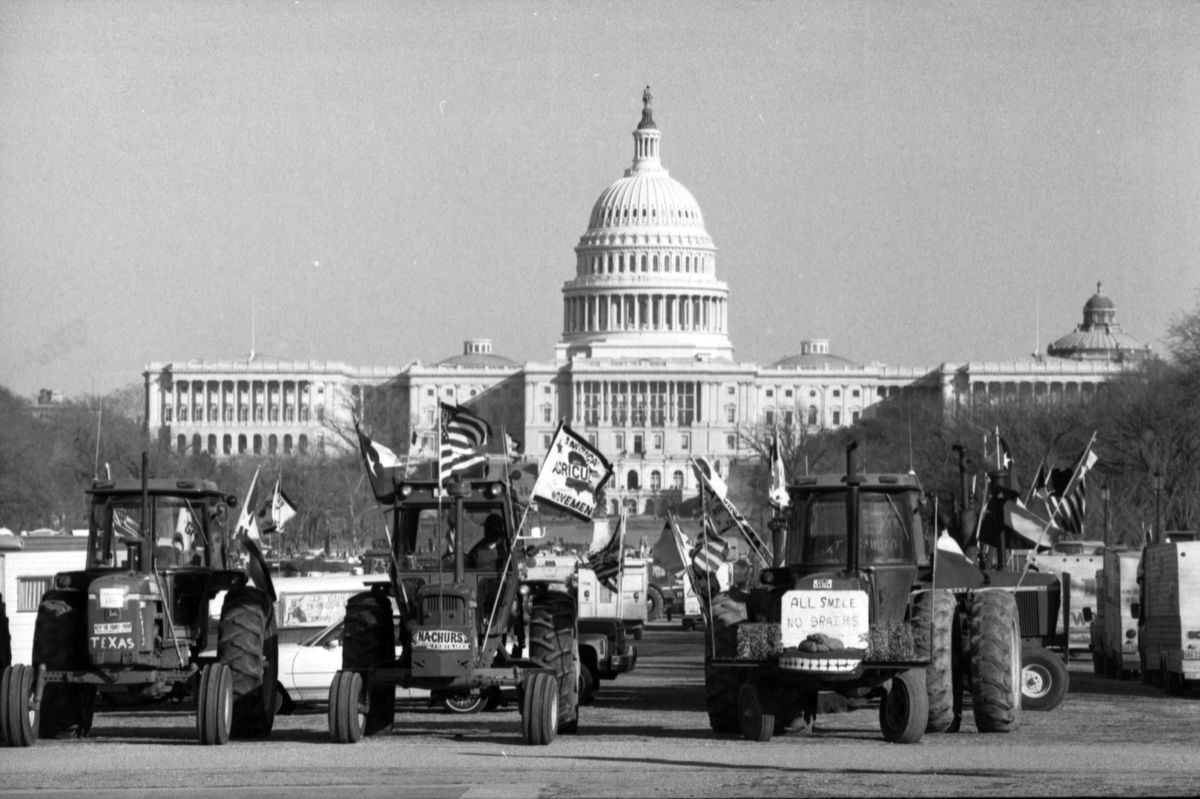
Farmers came from all over the country, some driving more than 1,500 miles. The convoys poked along at around 15 miles an hour, sometimes covering only about 100 miles in a day, before converging on Washington on February 5, 1979.
Anybody who's ever gotten behind a tractor on a two-lane road knows what one tractor can do to traffic. Imagine a few hundred of them on the highway.
That was sort of the point.
Thousands participated in the protest, while hundreds of tractors eventually occupied the National Mall. The farmers met with lawmakers and pushed for agricultural policies that would give them a reasonable return on what they produced.
They weren't demanding mansions and yachts. Most would've probably settled for making the tractor payment and having enough left over to take Mama out for supper on Saturday night at Cracker Barrel.
Washington Meets a Tractor
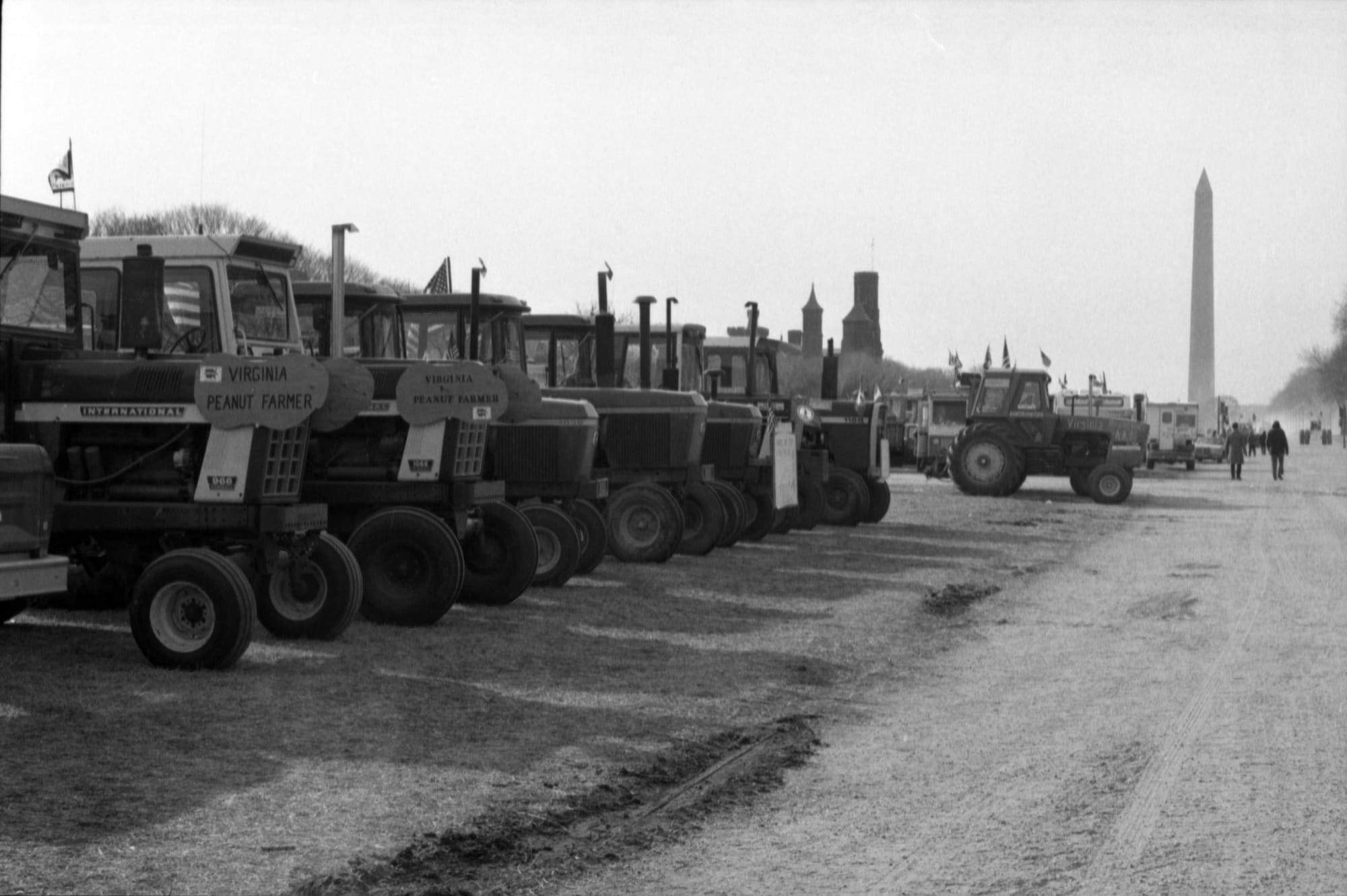
Photo Credit: February 1979, by Richard Hofmeister, SIA Acc. 11-009, 79-1681-15A.
The reception wasn't exactly neighborly.
Police tried to contain the tractors, traffic became a mess and parts of the National Mall got chewed up. There were confrontations and arrests, and Agriculture Secretary Bob Bergland didn't improve relations when he suggested that while some farmers had legitimate problems, others were motivated by "old-fashioned greed."
That went over about like telling a Baptist preacher the collection plate looked a little light.
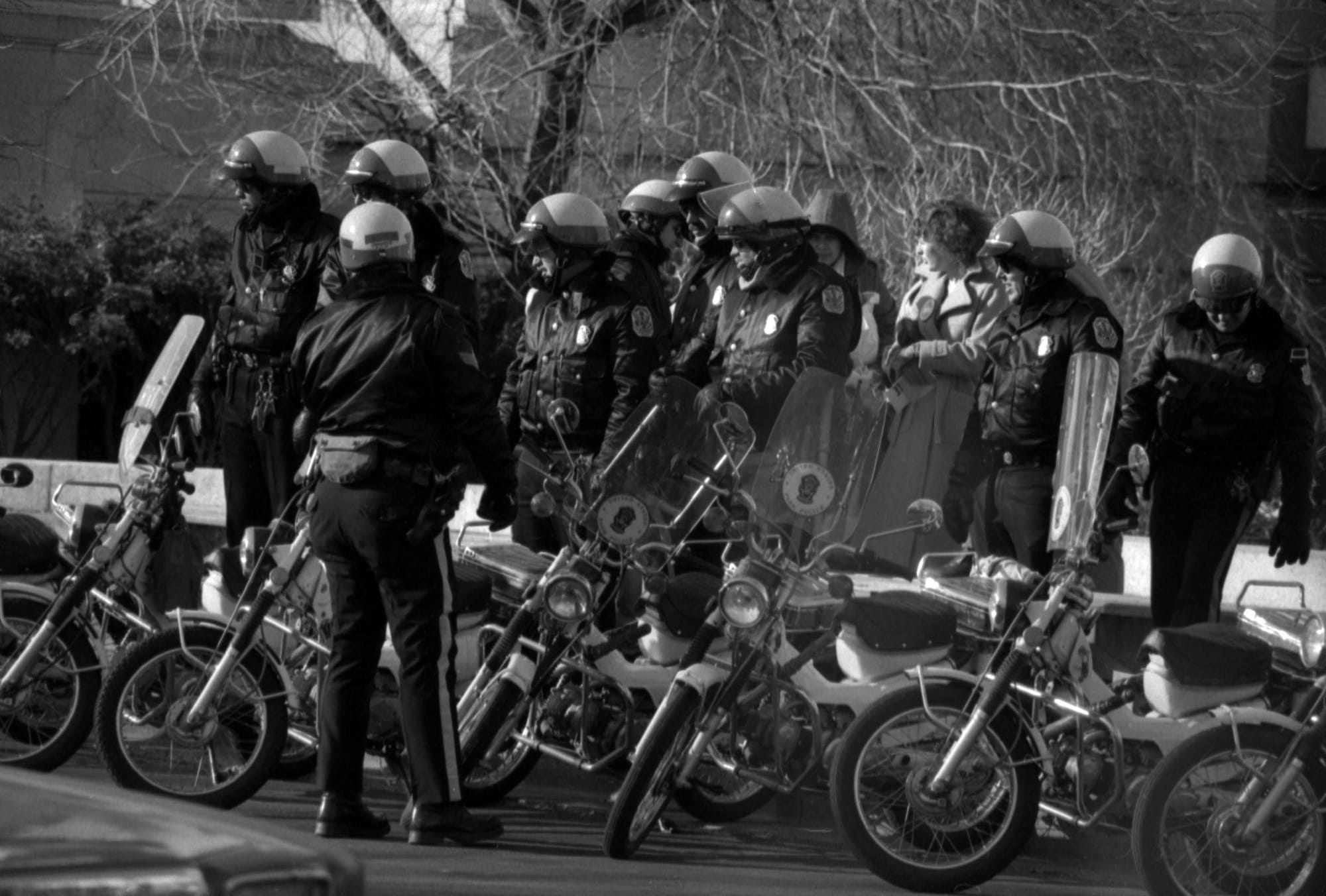
Photo Credit: Tractorcade on National Mall, February 1979, by Jeff Tinsley, SIA Acc. 11-009, 79-1687-26
Then Mother Nature stepped into the argument.
Over that Presidents Day weekend, a blizzard dumped roughly 22 inches of snow on Washington. Streets became nearly impassable and suddenly those big tractors everybody wanted gone were about the handiest things in town.
The farmers went to work.
They pulled stranded vehicles, helped clear snow and carried doctors and nurses to hospitals. Farm wives helped cook and clean because hospital employees couldn't get to work. The people who had arrived in Washington as protesters suddenly became the people Washington needed.
The Smithsonian later described the storm as the event that helped turn the farmers from agitators into heroes.
But eventually the snow melted, the tractors went home and the problems that brought them there didn't.
What Came Next
Within a few years, rural America was in the middle of the Farm Crisis of the 1980s. Interest rates soared, land values collapsed and farmers found themselves buried beneath debts they had taken on when times looked considerably better.
Farm auctions became common. Rural banks failed. Equipment dealerships suffered. Main Street suffered. Families who had worked the same ground for generations watched somebody else buy it at the courthouse steps.
The Tractorcade hadn't prevented the crisis, but looking back now, you have to wonder whether those farmers weren't warning us what was coming.
That's what makes those old photographs worth another look today. https://siarchives.si.edu/blog/tractors-are-coming
Here We Go Again?
USDA forecasts American farm-sector debt will reach about $624.7 billion in 2026, an increase of more than 5 percent in one year. Production expenses are forecast around $477.7 billion, while inflation-adjusted net farm income is expected to decline and farm working capital is projected to fall again.
Then there's a number that ought to make anybody who cares about the family farm sit up in their chair.
USDA estimates median farm income earned by farm households will be about negative $1,161 in 2026.
Negative is the KEY word there!
In plain mountain speak, that means the farm didn't put money in the household checking account. It took some out.
That's why so many farm families survive because somebody has a job somewhere else. One works at the school. Somebody drives a truck. Somebody works construction, at the hospital or at the factory. Quite often that off-farm job provides the health insurance while the farm provides something altogether different: another full-time job.
Meanwhile, seed costs money. Fertilizer costs money. Diesel costs money. Equipment costs a small fortune, and Lord help you if something with the word "hydraulic" attached to it breaks.
“Nobody ought to pretend 2026 is 1979 all over again. It ain't. But some of those numbers are beginning to have an awfully familiar smell to them.”
My grandfather and those other farmers drove to Washington because they believed the people making agricultural policy had gotten too far removed from the people actually raising America's food.
Forty-seven years later, that's still worth thinking about.
America doesn't have a shortage of farmers willing to work. We've got plenty of people willing to get up before daylight, worry about the weather, gamble on crops, livestock and work until after dark.
The question is how long we can expect them to keep doing it when the numbers don't work.
And if Washington needs reminding again, maybe it's time somebody checked the oil, air up the tires and fire up the tractors for another road trip.

John W. Peace II is a syndicated feature writer, two-time Amazon bestselling author and fifth-generation Virginia farmer whose work focuses on rural America, Appalachian culture, history and the people who keep small-town America running. Learn more at www.JohnWPeace.com and visit www.BackPorchTalesAndTravels.com for more stories from across Appalachia and rural America.
Readers, please share. Newspapers and magazines wishing to republish this or another article, please just email me. urtopix1@gmail.com
Comments ()