Appalachian Hog Killin’ Weather
How Rural America Put Meat Away for Winter
How Rural America Put Meat Away for Winter
*Radio Podcast: https://backporchtalesandtravels.riverside.com/e/appalachian-hog-killin-weather
There's a certain kind of cold that settles into the mountains in the fall. Not snow cold, just cold enough to step outside, see your breath and decide another cup of coffee might be in order. Our grandparents had another name for it: hog killin' weather.
Before refrigerators and freezers, cold weather wasn't just something to complain about. It was useful. A farmer needed several cold days to butcher a hog and get the meat salted, smoked or made into sausage before it spoiled. Across rural America, when the temperature dropped, somebody's hog was in trouble.
Here in Appalachia, hog killin' day started early. Family and neighbors showed up, fires were built and big kettles of water went on. Everybody had a job, including the young'uns, although some of them probably became mighty hard to locate once the real work started. The grown folks had learned the trade by watching their parents and eventually hearing, "Quit standing there and grab ahold of something."
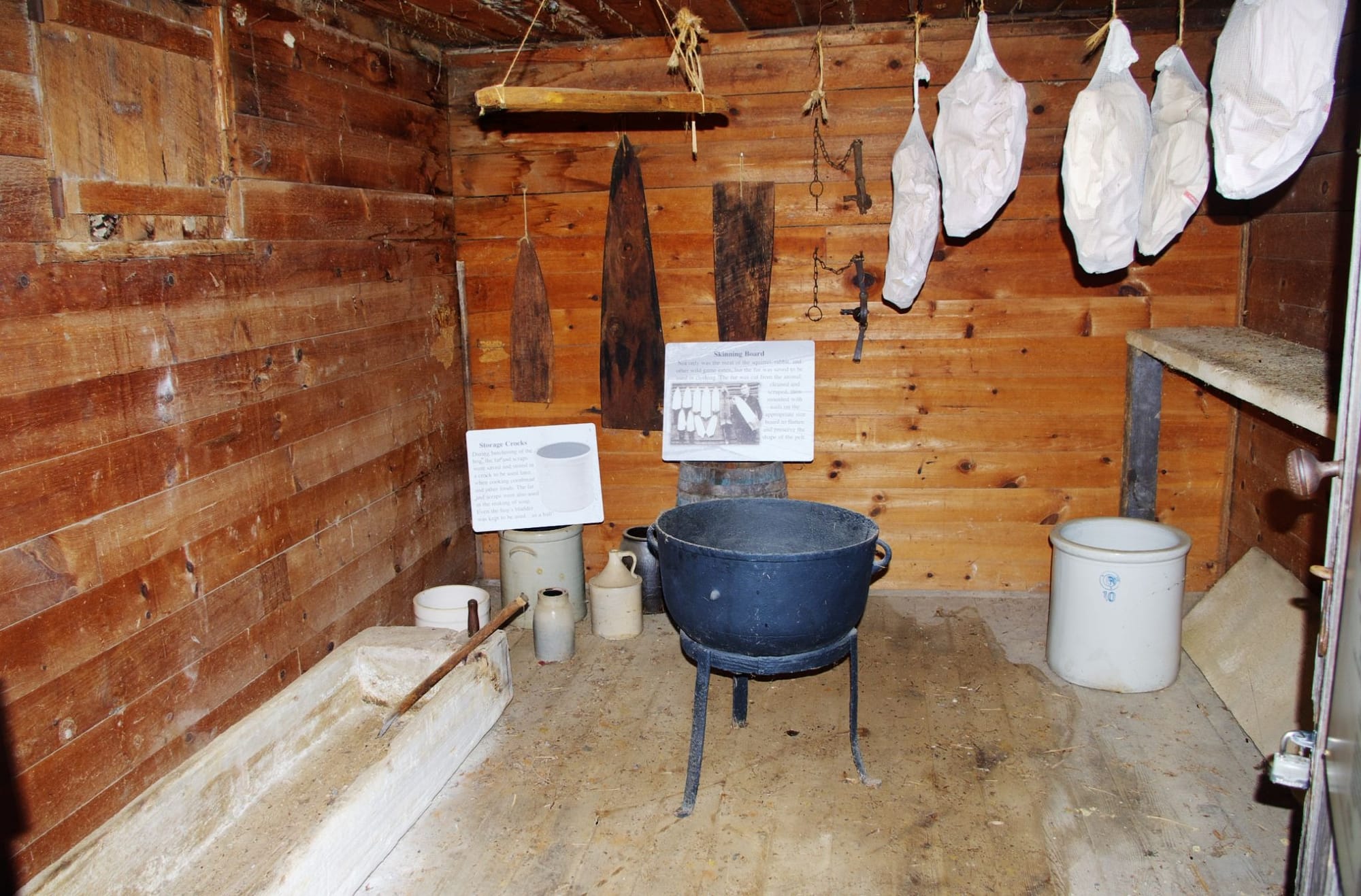
Photo Credit: https://commons.wikimedia.org/wiki/Category:CC-BY-3.0
Appalachian Smoke House
There wasn't much wasted. Hams and shoulders were cured, trimmings became sausage and fat was rendered into lard. Sausage seasoning was a matter of family pride. You might've had six families living along the same creek using nearly identical amounts of salt, sage and pepper, but don't you dare tell any of them that.
Travel north into Pennsylvania Dutch country and you'd recognize the work, but some of the results looked different. That's where you run into scrapple.
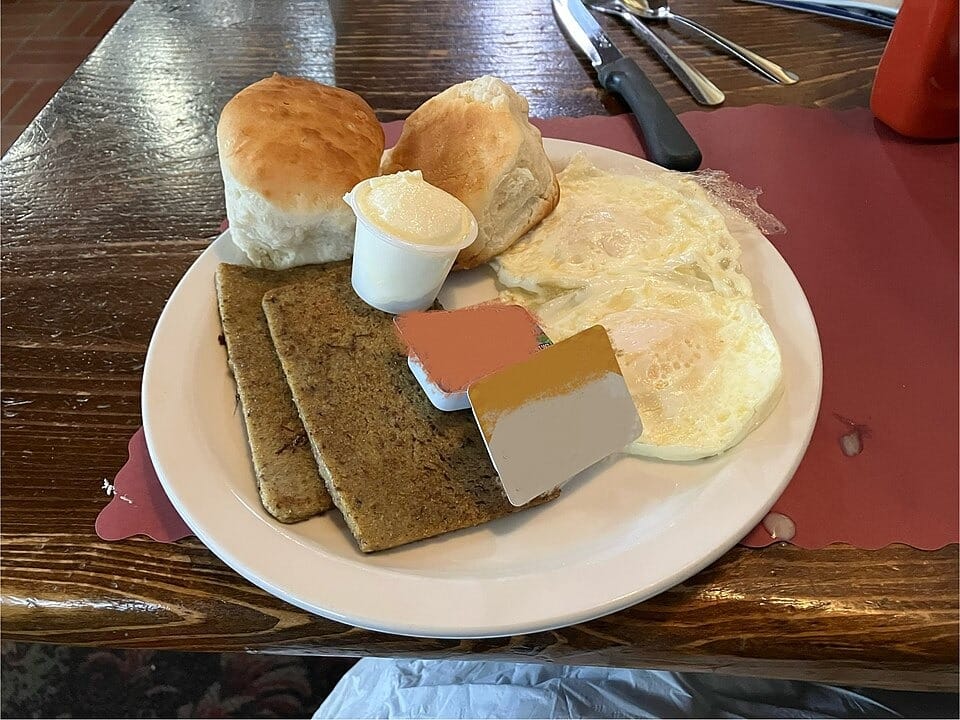
Photo Credit: https://creativecommons.org/publicdomain/zero/1.0/deed.en
Scrapple & Eggs
After the hams, bacon and sausage were taken care of, Pennsylvania German families still had edible pieces left. Those were cooked, mixed with cornmeal or buckwheat, seasoned and poured into pans to set. Later, the scrapple was sliced and fried.
Scrapple wasn't invented by somebody wondering what would look good on a restaurant menu. It came from necessity, because wasting food was a mighty poor habit with January coming. Folks still argue about whether to eat it with syrup, ketchup, apple butter or nothing at all. I'll leave that fight to Pennsylvania. We've got enough arguments in Appalachia, most of them involving gravy.
Head south toward Louisiana and hog killin' takes on another name. In Cajun country, the communal tradition is known as la boucherie.
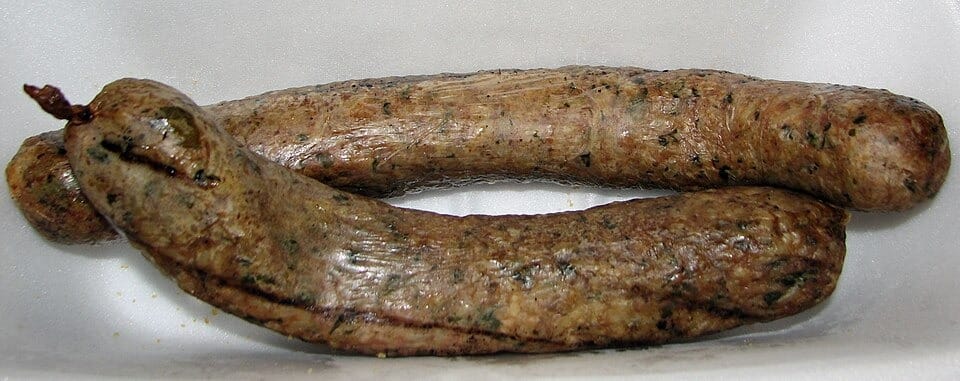
Photo Credit: https://commons.wikimedia.org/wiki/Category:CC-BY-3.0
Neighbors gathered to butcher a hog and turn it into boudin, sausage, cracklins, hogshead cheese and backbone stew. Before refrigeration, families sometimes took turns providing hogs, sharing both the work and fresh meat. The Cajuns weren't about to waste anything either, although I suspect an Appalachian grandmother might've had a few questions about what went into that boudin.
Now head west across the Mississippi and onto the Kansas prairie, where settlers had their own ways of putting meat away.
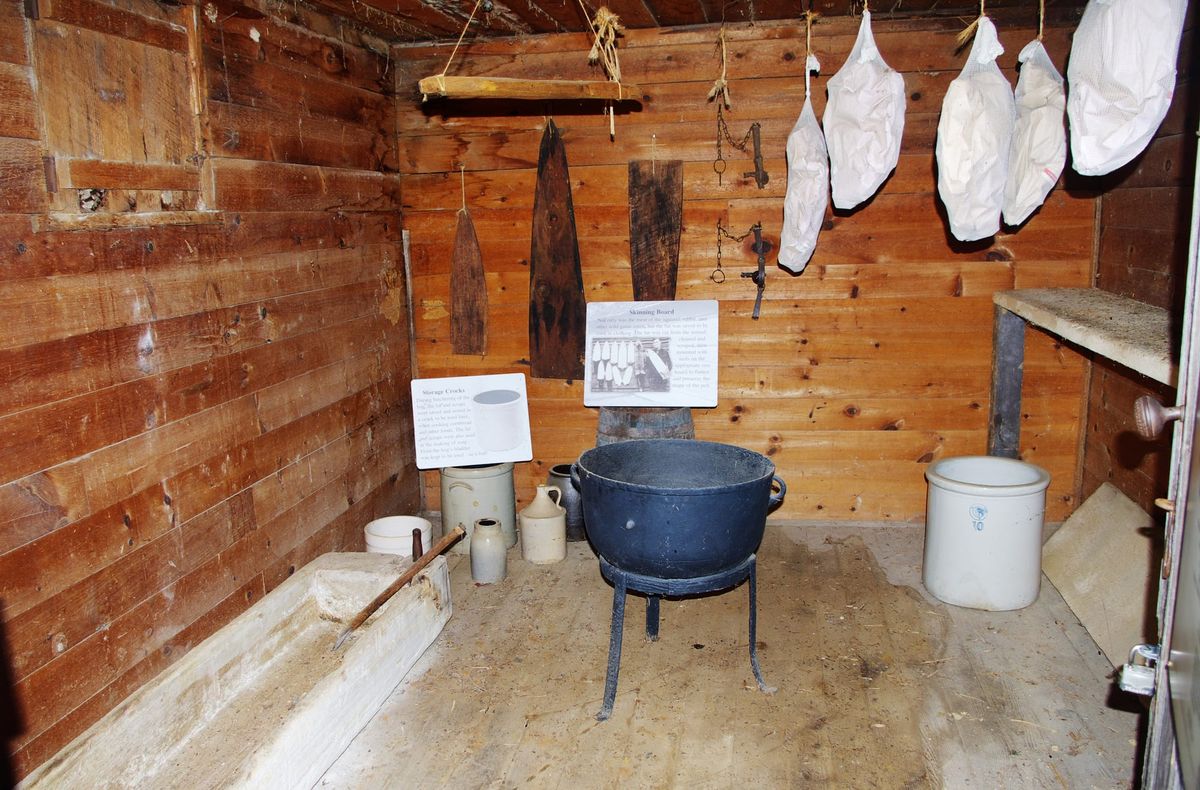
At what's now Tallgrass Prairie National Preserve, an old limestone curing house still stands. Hogs and other livestock were butchered in the fall, and the meat was salted, wrapped in cloth and hung from ceiling hooks. Some went into barrels of brine. It wasn't fancy, but it helped keep meat available through winter.
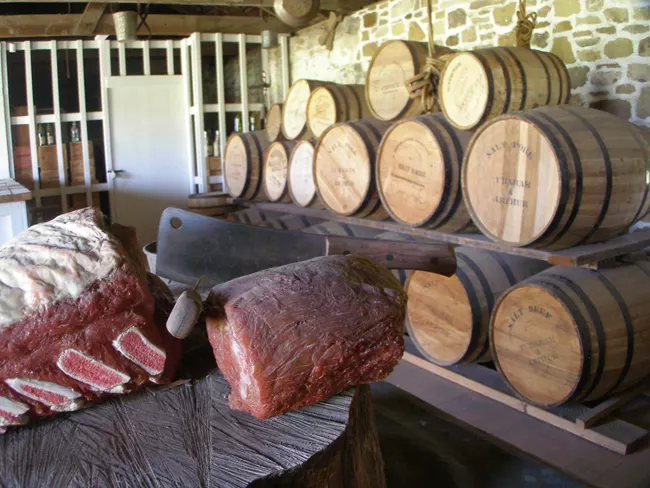
Photo Credit: National Park Service / Kansas Meat Curing House
Sometimes the meat had to be boiled to draw out the salt before cooking. I reckon anybody complaining about salty ham was liable to be reminded that having ham at all was something to be thankful for.
Farther west, Lewis and Clark's expedition ran into the same problem. During the winter of 1805–1806, near the Pacific Ocean, the explorers needed salt to preserve meat for their journey home. Men were sent to the coast to boil seawater in iron kettles, a job that went on for weeks.
Imagine crossing the American wilderness, reaching the Pacific Ocean and finding out your next assignment was boiling water. I'd have asked Captain Lewis if there wasn't something else needin’ done.
An Appalachian farmer curing country ham, a Pennsylvania Dutch family frying scrapple, a Cajun family making boudin and a Kansas settler salting meat might've wondered about one another's cooking. But they'd have understood the reason behind it. You didn't waste food, you didn't waste good weather, and when a job was too big for one family, you called the neighbors.
Modern refrigeration changed everything. Today we can buy bacon in July, sausage in April and ham whenever the grocery store puts it on sale. That's progress, and I ain't about to unplug my freezer just to prove a point.
Still, something disappeared when the necessity disappeared. Hog killin' day wasn't only about meat. It was grandparents teaching grandchildren, neighbors helping neighbors and recipes passed along without anybody measuring much of anything.
Ask an old mountain cook how much sage went into the sausage and you might hear, "'Bout enough." Ask how much was enough and the answer was usually, "You'll know." Somehow, they did.
The hog got divided up, the work got divided up and, sooner or later, so did the food. From the Appalachian Mountains to the Kansas prairie, putting meat away was as much about neighbors as it was about surviving winter.
Maybe that's why folks still talk about hog killin' weather. It reminds us of a time when the first cold snap meant more than digging out a winter coat.
It meant there was work to do, and you didn't have to do it alone.
—-----------------------------------------------------------------------------------------------
Back Porch Tales and Travels — There’s Always Room on the Back Porch
2X Amazon Best Selling Author, Syndicated Rural Feature Writer & Story-Teller


Comments ()