Virginia Loves Winning “Best State for Business.” Good. But Maybe It’s Time We Started Trying Just as Hard to Become the Best State to Be a Worker.
But wouldn't it be something if governors started competing for another title, too? Not just the best state to locate a business. The Best State to Be a Worker.
Virginia loves a good “Best State for Business” ranking, and to be fair, we ought to.
CNBC ranked Virginia the No. 3 state in America for business in 2026, and Virginia has finished in the top five every year since 2018. That's worth bragging about. A state that attracts businesses can attract jobs, investment and opportunity.
So keep the signs up. Keep cutting ribbons. Keep the economic development folks polishing their shoes and hauling prospects around the Commonwealth.
But I've got another question.
What kind of state are we building for the people who actually go to work in those businesses?
And that isn't just a Virginia question. From Tennessee to Texas, North Carolina to Indiana, governors and economic development agencies compete over who can offer companies the best business climate. Tax incentives get announced. Industrial parks get built. Governors stand beside corporate executives holding oversized scissors.
Maybe we ought to start competing just as hard over who can build the best climate for workers.
A new Economic Policy Institute study gives us reason to ask.
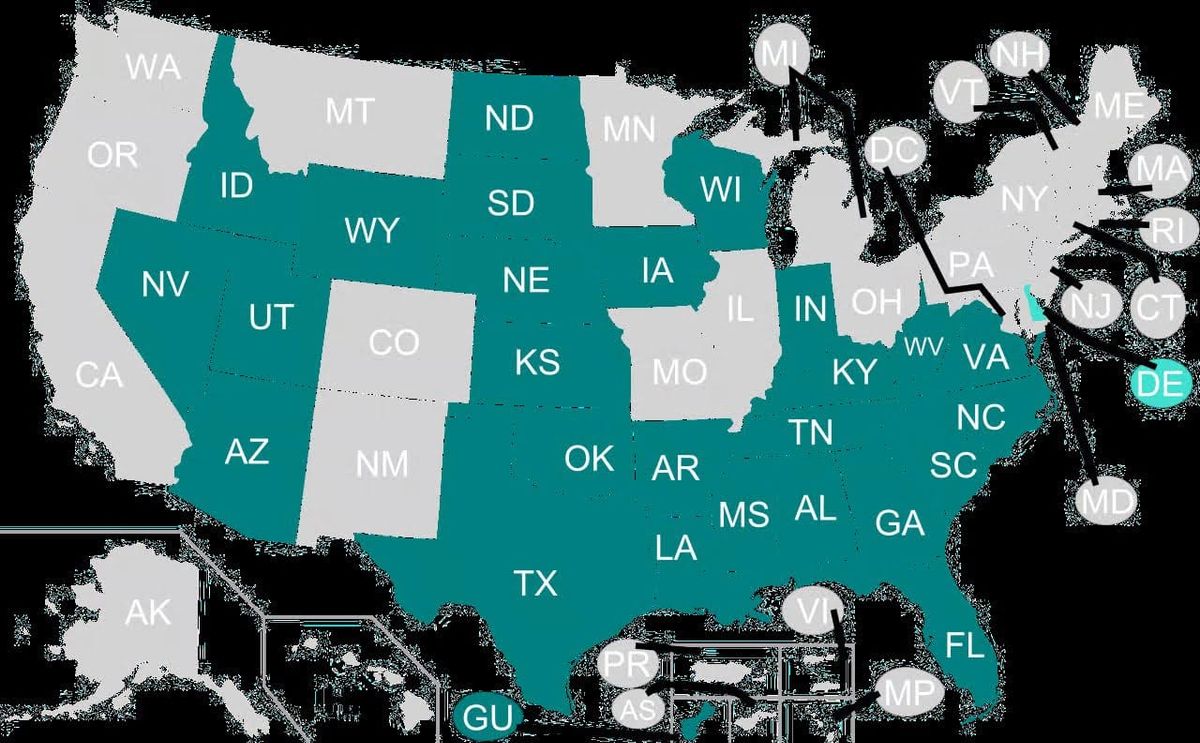
EPI found that workers in so-called “right-to-work” states earn 6.7 percent less on average than comparable workers in states without those laws. Researchers controlled for differences including occupation, industry, demographics and state economic conditions. For a median full-time worker, that gap amounts to more than $4,000 a year.
Four thousand dollars ain't pocket change.
Around my part of Appalachia, that'll buy groceries, make some truck payments, knock down an electric bill or two and maybe leave enough to take the family somewhere besides the drive-thru. I'd wager four thousand dollars spends about the same in Oklahoma, Georgia or Arizona.
The wage difference is even larger for some workers. EPI calculated a 7.3 percent penalty for women, 9.7 percent for Black workers and 10 percent for Hispanic workers. Perhaps most interesting, similar research about a decade ago put the overall right-to-work wage gap at 3.2 percent. The new estimate is more than twice that.
Virginia is one of the nation's right-to-work states, but we're hardly alone. The argument over these laws has been going on for generations, usually with business groups on one side and organized labor on the other.
Folks can argue that politics until the cows come home, and knowing cows, they'll probably take their sweet time getting there. But maybe we ought to quit arguing about the label for a minute and look at the paycheck.
Doing well for whom?
Oxfam America asks something close to that question with its annual Best States to Work Index. Instead of measuring whether corporate executives like a state's business climate, Oxfam examines labor policies involving wages, worker protections and the right to organize and collectively bargain. It looks at things such as wages relative to living costs, paid leave, unemployment benefits and workplace protections.
That's a different measuring stick. Maybe every state needs both.
Being friendly to business and friendly to workers aren't opposites. Businesses need roads, broadband, electricity, educated workers and sensible regulations. Workers need something too: decent wages, safe workplaces, affordable healthcare, retirement security, the ability to organize and a fair shot at building something better for their children.
We've gotten pretty good in America at announcing the size of a new factory before we ask what the jobs inside it will actually pay. The headline tells us $500 million invested and 1,000 jobs created. That's important. I've been involved in economic development myself, and I know what a major investment can mean to a rural community.
But the fellow standing behind a machine for eight or ten hours can't spend an economic development press release.
He can spend a paycheck.
Maybe our economic development scoreboards need another column. Keep asking how many companies came, how much they invested and how many jobs they created. Then ask what those jobs pay, what benefits come with them and whether the people doing the work can afford a home, raise a family and someday retire.
Virginia ought to keep trying to be the best state in America to do business. So should Tennessee, Kentucky, Texas, Pennsylvania and every other state competing for investment.
But wouldn't it be something if governors started competing for another title, too?
Not just the best state to locate a business.
The Best State to Be a Worker.

John W. Peace II | Author & Syndicated Feature Writer
John W. Peace II is a fifth-generation farmer from Big Stone Gap, Virginia, where he grew up on his family’s dairy, Clinch Haven Farms, and still lives today. He is a two-time Amazon bestselling author and a syndicated feature writer whose work appears in newspapers and online magazines. His writing focuses on rural America, Appalachia, working people, politics, history, and the stories that too often get overlooked.
Learn more: www.JohnWPeace.comFind John’s books, articles, newsletters, podcasts, and social media: https://linktr.ee/JohnWPeace

Comments ()